
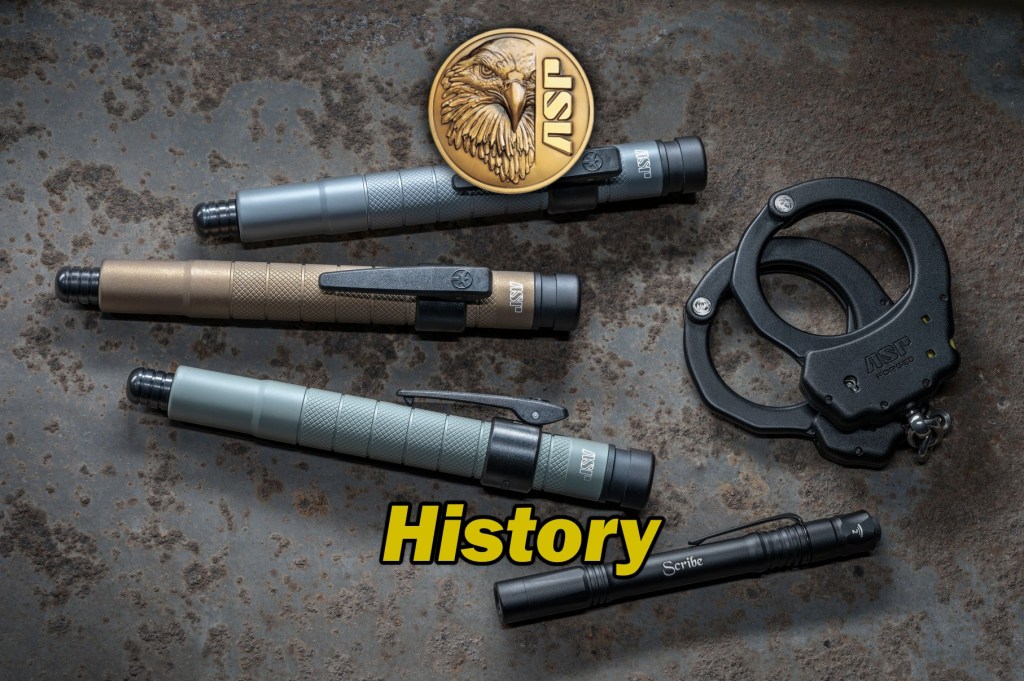
ASP Gear, formally known as Armament Systems and Procedures, occupies a unique place in the world of edged tools and defensive equipment. Unlike traditional knife brands rooted in hunting or craftsmanship, ASP emerged from the practical realities of law enforcement and public safety. Its products were not designed for collectors or casual users but for professionals operating in high-risk, real-world environments.
Over the decades, ASP Gear has become synonymous with duty-ready equipment, particularly expandable batons and restraint tools, earning trust among law enforcement agencies, military units, and security professionals worldwide.
Founding Vision and Early Development
ASP was founded in the United States in the mid-1970s by Bruce Wegner, a former law enforcement officer who recognized critical gaps in the tools available to police officers. At the time, many officers relied on traditional wooden nightsticks, which were bulky, limited in effectiveness, and often difficult to carry discreetly.
Wegner envisioned equipment that was compact, efficient, and purpose-built for modern policing. This vision led to the creation of expandable batons, a concept that would ultimately define ASP’s identity and reshape defensive tool standards across the law enforcement community.
The company name, Armament Systems and Procedures, reflected its core philosophy: tools should be integrated with proper training, technique, and policy.
The Introduction of the Expandable Baton
ASP’s breakthrough came with the development and refinement of the telescoping expandable baton. Unlike rigid batons, the ASP baton could be collapsed for discreet carry and rapidly deployed when needed. This innovation addressed a long-standing challenge for officers who needed quick access to force options without cumbersome equipment.
Early adoption by law enforcement agencies validated the concept. Officers appreciated the baton’s balance, striking power, and portability. Over time, ASP refined the design, improving materials, locking mechanisms, and grip textures to enhance reliability and safety.
The expandable baton soon became a standard piece of equipment in police forces around the world.
Emphasis on Training and Proper Use
From its earliest days, ASP distinguished itself by emphasizing training as much as product development. Wegner believed that tools alone were insufficient without proper instruction, and this philosophy became a cornerstone of the brand.
ASP developed comprehensive training programs focused on use-of-force decision-making, baton techniques, restraint methods, and defensive tactics. This integration of equipment and education helped ASP gain credibility among agencies seeking responsible, professional solutions rather than purely tactical gear.
The company’s approach reinforced its reputation as a partner in public safety rather than simply a manufacturer.
Expansion into Restraints and Tactical Accessories
As ASP grew, the company expanded beyond batons into other areas of law enforcement equipment. Handcuffs, restraint systems, flashlights, and tactical accessories became part of the ASP lineup, each designed with the same emphasis on reliability and professional use.
ASP handcuffs gained recognition for their durability and precision engineering, often incorporating features that addressed common field issues such as jamming or improper fit. Tactical flashlights were developed to meet the needs of officers working in low-light environments, emphasizing durability and ergonomic design.
While ASP is not primarily known as a knife brand, its edged tools and defensive accessories reflect the same duty-first mindset found across its product range.
Global Adoption and Institutional Trust
By the late 20th century, ASP Gear had achieved widespread adoption beyond the United States. Police forces, corrections departments, and security organizations across Europe, Asia, and other regions incorporated ASP equipment into their standard issue.
This global presence was driven by consistent performance, standardized training materials, and a reputation for ethical product development. ASP’s tools were often selected through rigorous testing and evaluation processes, reinforcing the brand’s credibility at an institutional level.
Few defensive equipment companies have achieved similar levels of international trust.
Innovation Through Materials and Engineering
ASP has continually invested in materials science and engineering improvements. Batons evolved from early steel constructions to advanced alloys optimized for strength, weight, and durability. Grip designs were refined to improve retention and control under stress, and deployment mechanisms were enhanced to ensure consistent performance.
These incremental innovations reflect ASP’s philosophy of refinement rather than reinvention. Each generation of products builds on lessons learned from real-world use, feedback from professionals, and advancements in manufacturing technology.
This practical evolution has helped ASP remain relevant despite changing equipment trends.
ASP in the Civilian and Training Markets
While ASP Gear remains closely associated with law enforcement, the brand has also found a place in civilian self-defense and professional training markets. Security professionals, instructors, and responsible civilian users have adopted ASP products where legally permitted.
The company has consistently emphasized legal compliance and responsible ownership, reinforcing its image as a professional-grade brand rather than a novelty or aggressive tactical label.
This careful positioning has allowed ASP to expand its reach without compromising its core identity.
Relationship to the Broader Defensive Tools Industry
ASP’s influence extends beyond its own product line. The widespread acceptance of expandable batons and standardized restraint tools has shaped expectations across the tactical gear industry.
Many competitors have entered the market over the years, but ASP’s early innovations and emphasis on training set benchmarks that others continue to follow. In this way, ASP helped professionalize a segment of the industry that was once fragmented and inconsistent.
Challenges and Continued Relevance
Like all companies serving law enforcement, ASP operates in an environment shaped by evolving policies, public scrutiny, and changing standards of force. The company has navigated these challenges by reinforcing its commitment to accountability, training, and ethical product development.
Rather than retreating from controversy or shifting focus, ASP has remained engaged in discussions about best practices and responsible equipment use.
This steady approach has helped maintain long-term relevance in a demanding field.
A Legacy Built on Responsibility and Performance
The history of ASP Gear is not one of tradition-bound craftsmanship or artistic expression, but of practical innovation driven by real-world needs. From its origins in addressing everyday policing challenges to its status as a global standard in defensive equipment, ASP has consistently focused on function, reliability, and responsibility.
ASP Gear stands as an example of how thoughtful design, integrated training, and ethical intent can elevate tools beyond equipment and into essential components of professional practice. Its legacy continues to influence how defensive tools are designed, deployed, and understood in modern public safety environments.


Leave a Reply