
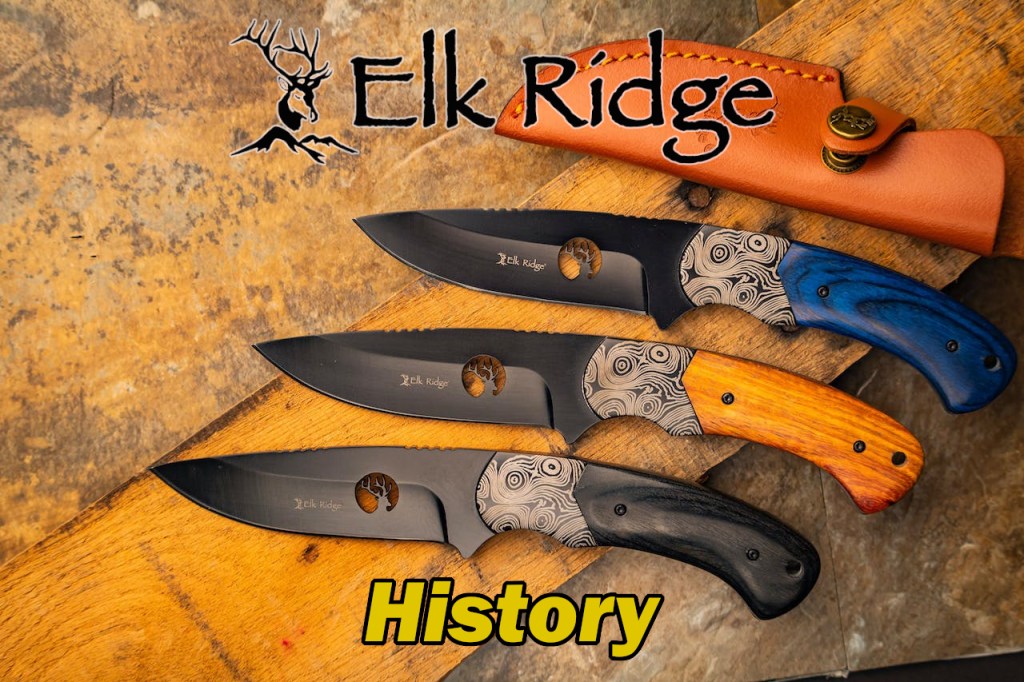
Elk Ridge Knives is a contemporary knife brand best known for offering affordable hunting, pocket, and edc knives with strong visual appeal. While it does not trace its roots to a century-old workshop or regional blade-making guild, Elk Ridge represents a modern chapter in the evolution of the knife industry—one shaped by global manufacturing, wide retail distribution, and consumer accessibility.
The brand’s development reflects how the knife market expanded in the late 20th and early 21st centuries, making outdoor tools more widely available to recreational users.
Origins in a Changing Knife Industry
Elk Ridge emerged during a period when the knife industry was shifting toward globalization. As production capabilities expanded internationally, brands increasingly partnered with overseas manufacturers to produce knives at competitive price points.
Elk Ridge became part of this movement, focusing on creating knives designed for hunters, outdoorsmen, and general utility users who wanted functional tools without premium pricing.
Rather than centering on heritage craftsmanship, the brand built its identity around affordability and variety.
Positioning in the Outdoor Market
From its early years, Elk Ridge targeted the outdoor recreation segment. Hunting knives, fixed blades, and folding knives formed the foundation of the product line. Many designs featured traditional hunting aesthetics—wood accents, camouflage patterns, and wildlife-themed imagery.
This approach resonated with casual hunters and outdoor enthusiasts looking for visually distinctive tools suited for field tasks.
Elk Ridge knives often emphasize practical blade shapes such as drop points and clip points, commonly associated with skinning and general camp use.
Expansion of Product Variety
As the brand matured, Elk Ridge expanded into a broader range of knife categories. Assisted-opening folders, tactical knives, multi-blade sets, and gift packages became part of the lineup.
The company also introduced combination sets that included fixed blades paired with smaller companion knives or accessories, appealing to buyers seeking value bundles.
This diversification allowed Elk Ridge to maintain visibility across multiple retail channels.
Design and Material Choices
Elk Ridge knives typically incorporate stainless steels chosen for corrosion resistance and ease of maintenance. While not positioned as premium high-performance steel options, these materials provide dependable everyday functionality for general use.
Handle materials often include pakkawood, aluminum, synthetic composites, and decorative inlays. Many models emphasize aesthetic detail, offering engraved bolsters, patterned finishes, or wildlife motifs.
The brand’s design philosophy blends traditional outdoor styling with modern production techniques.
Retail Accessibility and Distribution
A defining characteristic of Elk Ridge’s history is its wide retail presence. The brand gained traction through online marketplaces, outdoor retailers, and specialty knife shops, making it accessible to a broad customer base.
This distribution strategy aligned with changing consumer behavior. As e-commerce expanded, customers increasingly sought affordable knives that balanced design, function, and price.
Elk Ridge benefited from this shift by offering visually appealing products at entry-level and mid-range price points.
Responding to Market Trends
The knife industry has seen waves of tactical influence, survival trends, and everyday carry culture. Elk Ridge adapted by incorporating assisted-opening mechanisms, textured grips, and contemporary finishes into its folding knife designs.
While maintaining its outdoor roots, the brand broadened its appeal to include users interested in practical utility knives for daily tasks.
This adaptability helped the company remain relevant in a competitive and trend-driven market.
Elk Ridge Today
Today, Elk Ridge is recognized as a value-oriented brand offering a wide selection of knives suited to hunting, camping, and general use. The lineup continues to feature fixed blades, folding knives, and themed collections that appeal to outdoor enthusiasts.
The company’s focus remains on affordability, design variety, and functional reliability rather than high-end metallurgy or handcrafted production.
Its role in the knife industry reflects modern retail dynamics more than traditional blade-making lineage.
A Contemporary Chapter in Knife Retail
The history of Elk Ridge Knives illustrates how the knife market expanded beyond regional craftsmanship into global production and mass accessibility. By emphasizing affordability and broad appeal, the brand carved out a position within the outdoor and hunting community.
While not rooted in centuries-old forging traditions, Elk Ridge represents the modern era of knife distribution—where style, practicality, and price accessibility intersect.
In that context, the brand’s history is less about heritage and more about meeting the evolving demands of everyday outdoor users.
 Knife History
Leave a comment