
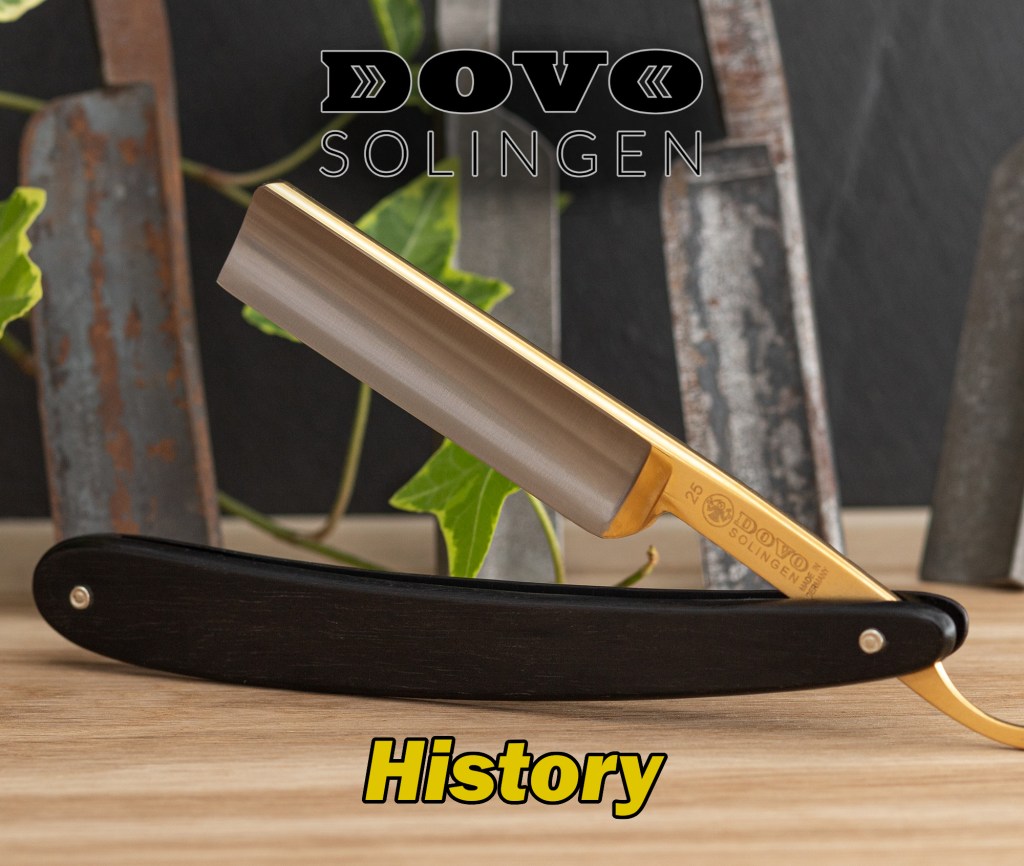
DOVO Razors stands as one of the most recognized names in traditional shaving. Based in Solingen, Germany—a city long associated with high-quality blades—DOVO has played a central role in preserving and advancing straight razor craftsmanship in the modern era. While many edged tools have evolved toward convenience and disposability, DOVO has remained closely tied to traditional manufacturing and hand-finished steel.
The company’s history reflects both the rise of industrial blade production and the endurance of artisanal shaving culture.
Origins in Solingen
DOVO was founded in 1906 in Solingen, a city often referred to as the “City of Blades.” Solingen’s knife-making tradition dates back centuries, supported by skilled craftsmen, guild systems, and a reputation for producing some of Europe’s finest swords, knives, and razors.
The company began as DOVO Stahlwaren, focusing on straight razors during a time when such tools were standard for personal grooming. At the beginning of the 20th century, straight razors were essential household items, and competition among Solingen manufacturers was strong.
From the start, DOVO committed to precision grinding and finishing techniques that aligned with Solingen’s reputation.
Early Growth and Razor Specialization
During the early and mid-20th century, DOVO refined its razor production processes. Straight razors require a delicate balance of hardness, flexibility, and precise geometry. The hollow grind, which gives a razor its thin, sharp edge, demands skilled grinding and polishing.
DOVO developed expertise in these processes, producing blades that were known for smooth shaving performance and consistent quality. Traditional carbon steels were typically used, allowing for extremely fine edges while requiring careful maintenance.
This focus on razor specialization helped distinguish DOVO from broader cutlery manufacturers.
Surviving Industry Shifts
The introduction of safety razors and later disposable cartridge systems dramatically changed the shaving industry. By the mid-20th century, straight razor use declined sharply as convenience became a dominant factor in consumer choice.
Many razor manufacturers closed or shifted entirely away from traditional straight razors. DOVO, however, continued production, maintaining the skills and equipment necessary for traditional razor making.
This commitment allowed the company to survive when others disappeared, preserving techniques that might otherwise have been lost.
Craftsmanship and Manufacturing Methods
DOVO razors are known for their detailed finishing and handwork. The manufacturing process involves forging or stamping high-carbon steel blanks, grinding to precise hollow profiles, heat treatment, polishing, and final honing.
Even in modern production, significant portions of the finishing process are performed by skilled workers. The adjustment of blade geometry and final inspection require experience that cannot be entirely automated.
This blend of industrial capability and manual finishing defines DOVO’s identity.
Revival of Traditional Wet Shaving
In the late 20th and early 21st centuries, interest in traditional wet shaving began to grow again. Enthusiasts sought alternatives to disposable systems, valuing craftsmanship, sustainability, and the ritual aspect of shaving.
DOVO was well positioned for this revival. Unlike companies that would have needed to reintroduce straight razors, DOVO had maintained continuous production and expertise.
As a result, the brand became one of the primary names associated with modern straight razor culture.
Product Range and Expansion
While straight razors remain central to its identity, DOVO has expanded into other grooming tools, including safety razors, shaving brushes, and related accessories. This broader product offering reflects changes in shaving preferences while maintaining the brand’s traditional orientation.
Despite diversification, the straight razor remains a symbol of the company’s heritage and craftsmanship.
Collectors and shaving enthusiasts often regard DOVO as one of the last major brands still producing straight razors at scale in Solingen.
International Recognition
DOVO’s reputation extends well beyond Germany. The brand is distributed globally and has become closely associated with high-quality German razor manufacturing.
For many users entering the world of straight razors, DOVO represents a reliable starting point—combining traditional techniques with consistent production standards.
Its global presence reinforces Solingen’s historic reputation for blade excellence.
DOVO in the Modern Era
Today, DOVO continues to operate in a niche but dedicated market. Straight razor shaving remains a specialized practice, but one supported by a passionate community.
Modern DOVO razors often feature variations in grind, blade width, and handle materials, allowing users to select tools suited to their preferences. Yet the fundamental construction principles remain rooted in early 20th-century methods.
In a grooming industry dominated by disposable products, DOVO stands as a reminder of longevity and craftsmanship.
A Legacy of Edge and Tradition
The history of DOVO Razors is closely intertwined with the broader history of Solingen blade making. Founded at a time when straight razors were essential tools, the company endured industry upheavals by preserving traditional manufacturing skills.
By continuing to produce straight razors through decades of change, DOVO helped ensure that this form of craftsmanship survived into the modern era. Its legacy is not simply about shaving tools, but about maintaining a tradition of precision steel work in a world that often favors convenience over craft.
 Knife History
Leave a comment