
DMT, short for Diamond Machining Technology, is one of the most influential companies in modern knife sharpening. While many sharpening brands rely on traditional abrasives like aluminum oxide or natural stones, DMT built its reputation on industrial diamond surfaces engineered for precision and consistency. The company helped popularize diamond sharpening tools for both professional and consumer use, permanently influencing how knives and tools are maintained.
DMT’s story is rooted in material science rather than blade making, but its impact on knives is undeniable.
Founding and Early Innovation
DMT was founded in 1976 in the United States during a period of expanding industrial material innovation. Synthetic diamonds were becoming more widely available for industrial applications, including cutting, grinding, and machining.
Recognizing the potential of diamond abrasives beyond heavy industry, DMT focused on creating precision diamond sharpening surfaces suitable for tools, knives, and fine instruments. The company developed a method of bonding micron-sized diamond particles to a flat metal substrate, producing a consistent, long-lasting sharpening surface.
This approach differed significantly from traditional whetstones, which can wear unevenly and require flattening over time.
Introduction of Diamond Whetstones
DMT’s diamond whetstones were among the first widely available sharpening tools to offer flat, rigid, and maintenance-light surfaces. Unlike natural stones, which vary in density and performance, diamond plates provided predictable results.
The flatness of the plates became a defining advantage. For users sharpening chisels, plane irons, and precision tools, maintaining a true flat surface was critical. DMT’s manufacturing process addressed this need directly.
This consistency quickly gained attention among woodworkers, knife enthusiasts, and industrial users.
Advantages Over Traditional Stones
Diamond sharpeners offered several practical benefits. They cut aggressively and efficiently, particularly on hard steels that were becoming more common in knives. As metallurgy advanced and blade manufacturers introduced higher-performance stainless and tool steels, traditional stones sometimes struggled with speed and wear.
DMT’s diamond surfaces remained effective against these harder alloys. Additionally, diamond plates did not require soaking, extensive maintenance, or frequent resurfacing.
These qualities helped establish diamond sharpeners as a serious alternative to conventional methods.
Expansion Into Consumer Markets
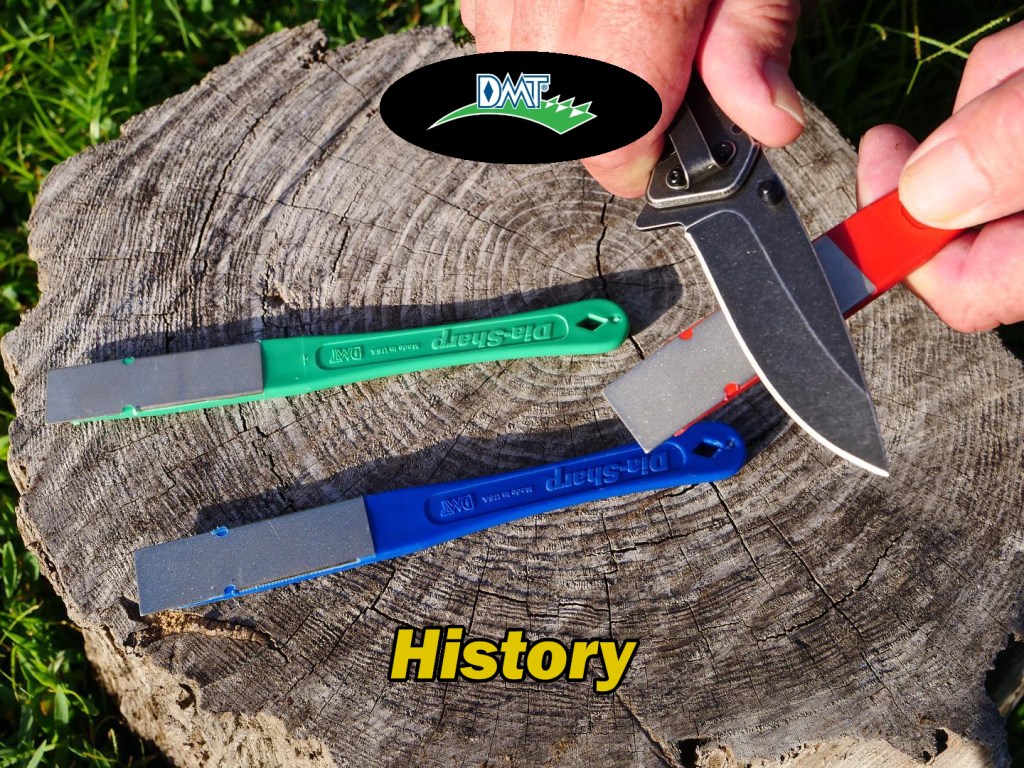
While DMT’s technology had industrial applications, the company expanded into the consumer market during the 1980s and 1990s. Pocket sharpeners, bench stones, and specialty tools were developed for hunters, outdoorsmen, chefs, and hobbyists.
This expansion coincided with growing interest in high-performance knives. As knife steels improved, so did the need for reliable sharpening systems capable of maintaining those edges.
DMT positioned itself as a precision-focused brand serving both professionals and everyday users.
Influence on Modern Sharpening Standards
DMT played an important role in normalizing diamond abrasives in the knife world. Before diamond plates became common, many users viewed them as specialized or industrial tools.
By offering accessible formats and clear grit progression systems, DMT helped educate users about abrasive consistency and edge refinement. The brand contributed to a broader understanding of how different grit levels affect edge performance.
This educational impact shaped how modern enthusiasts approach sharpening.
Product Diversification
Over time, DMT expanded its lineup to include a variety of grit options, sizes, and formats. From compact pocket sharpeners to large bench plates and guided sharpening systems, the company addressed multiple user needs.
Color-coded grit systems and clear labeling improved usability, making it easier for beginners to understand progression from coarse reshaping to fine honing.
DMT’s focus remained on precision, durability, and flatness rather than complicated mechanical systems.
Durability and Longevity
One of DMT’s defining characteristics has been longevity. Properly maintained diamond plates can remain effective for years without significant degradation. This durability distinguishes them from some traditional stones that wear down with repeated use.
While diamond plates may feel aggressive initially, they often break in over time, providing smoother performance while maintaining cutting efficiency.
This reputation for long-term reliability strengthened customer loyalty.
DMT in the Modern Knife Landscape
Today, DMT remains a recognized name in sharpening circles. The company’s products are used by knife collectors, chefs, woodworkers, and industrial professionals alike.
As modern steels continue to evolve, diamond abrasives remain relevant because of their ability to handle high hardness levels. DMT’s early commitment to diamond technology positioned it well for these developments.
The brand continues to represent a practical, science-driven approach to edge maintenance.
A Legacy Built on Precision Abrasives
The history of DMT Sharpeners is not about blades themselves, but about the surfaces that shape them. By applying industrial diamond technology to everyday sharpening, DMT transformed how users maintain cutting tools.
From professional workshops to home kitchens, the company’s innovations helped standardize reliable, flat, and efficient sharpening systems. In doing so, DMT secured its place in the broader history of knife care—proving that a sharp edge begins not just with steel, but with the right abrasive.
 Knife History
Leave a comment