
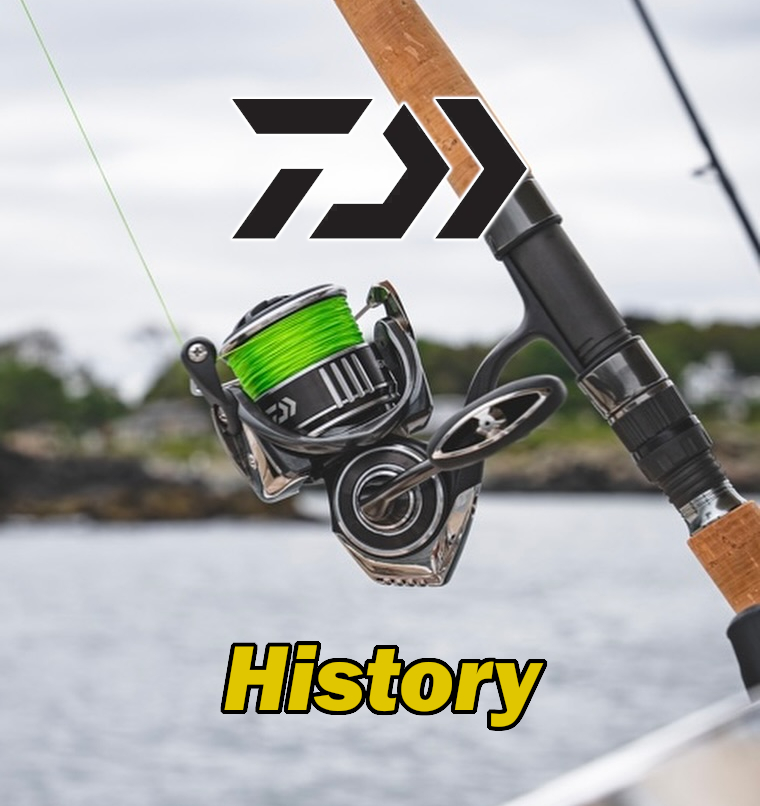
Daiwa is one of the most recognized names in modern fishing gear, known primarily for its reels, rods, and advanced tackle technologies. While not a knife manufacturer in the traditional sense, Daiwa’s role in outdoor gear history is significant. The company’s rise reflects Japan’s broader postwar manufacturing expansion, characterized by precision engineering, innovation, and a relentless focus on performance.
Daiwa’s history is a story of specialization, technological development, and global reach.
Origins in Postwar Japan
Daiwa was founded in 1958 in Japan under the name Daiwa Seiko Co., Ltd. The company began as a manufacturer of fishing reels during a period when Japan’s industrial sector was rapidly rebuilding and modernizing following World War II.
Fishing was already a deeply embedded cultural activity in Japan, both commercially and recreationally. Daiwa entered the market with a focus on quality engineering and mechanical reliability, aiming to produce reels that could compete both domestically and internationally.
From the outset, the company emphasized precision manufacturing, a trait that would become central to its identity.
Early Expansion and Technological Focus
During the 1960s and 1970s, Daiwa expanded beyond reels to include rods and other fishing tackle. Rather than simply replicating existing designs, the company invested heavily in research and development.
Daiwa became known for introducing advanced reel technologies, including improvements in drag systems, gearing, and spool design. Lightweight materials such as aluminum alloys were incorporated to improve performance without sacrificing strength.
This commitment to engineering innovation helped Daiwa gain credibility in competitive fishing markets.
Entry Into the Global Market
By the 1970s, Daiwa began expanding aggressively into North America and Europe. Recreational fishing was growing in popularity, and anglers were increasingly interested in high-performance equipment.
Daiwa’s products gained attention for their smooth operation, durability, and refined construction. As global distribution expanded, the company established subsidiaries and distribution networks to support international customers.
This global reach transformed Daiwa from a domestic Japanese brand into a worldwide competitor.
Advancements in Materials and Design
One of Daiwa’s defining characteristics has been its use of advanced materials. The company introduced graphite and carbon composite rods that reduced weight while increasing sensitivity and strength.
In reel manufacturing, Daiwa pioneered innovations such as magnetic braking systems and precision-cut gearing. These developments were particularly influential in baitcasting reel design, where control and smoothness are essential.
By continuously refining materials and internal mechanics, Daiwa positioned itself as a technology-driven brand rather than a traditional tackle maker.
Competition and Industry Influence
Throughout the late 20th century, Daiwa competed closely with other major fishing tackle manufacturers. The rivalry pushed innovation across the industry, leading to improvements in casting distance, drag performance, and ergonomic design.
Daiwa’s influence extended beyond individual products. The company helped shape expectations for what modern fishing gear should deliver in terms of smoothness, reliability, and lightweight construction.
Its emphasis on research and performance raised standards across the recreational fishing market.
Diversification of Product Lines
As the company matured, Daiwa expanded into specialized fishing categories, producing gear for freshwater, saltwater, surf fishing, and tournament competition. High-end product lines were introduced alongside more accessible offerings, allowing the brand to reach a broad range of anglers.
Daiwa also invested in professional sponsorships, aligning its products with competitive fishing circuits. These partnerships reinforced its performance-oriented reputation.
This diversification strengthened the company’s global footprint.
Daiwa in the Modern Era
Today, Daiwa remains one of the largest and most recognized fishing gear manufacturers in the world. The brand continues to emphasize technological advancement, incorporating aerospace-inspired materials and precision machining into its reels and rods.
Modern Daiwa products often feature lightweight carbon frames, advanced drag systems, and refined ergonomic designs that reflect decades of iterative improvement.
While trends in fishing evolve, Daiwa’s core identity remains centered on engineering precision and performance.
Cultural and Industry Legacy
Daiwa’s importance lies in its role as a bridge between traditional fishing culture and high-performance modern equipment. The company demonstrated how advanced engineering could enhance an activity rooted in patience and skill.
By prioritizing innovation and global expansion, Daiwa helped define what contemporary anglers expect from their gear.
Its impact is visible not only in its own products, but in the broader technological evolution of fishing tackle.
A Legacy Built on Precision
The history of Daiwa is a reflection of postwar Japanese industrial growth and the globalization of recreational fishing. From its beginnings as a reel manufacturer to its status as an international leader in fishing technology, Daiwa has remained committed to refining the tools anglers rely on.
Through steady innovation and attention to detail, the company has secured its place as one of the defining brands in modern fishing equipment history.
 Knife History
Leave a comment