
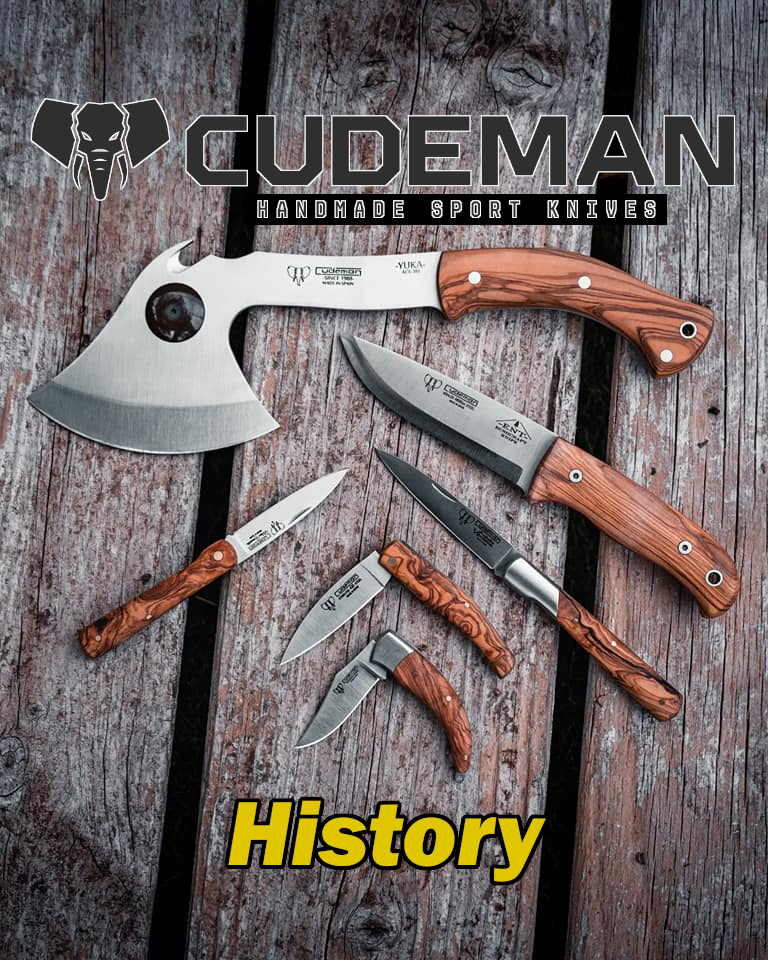
Cudeman Knives is a modern Spanish brand that blends regional knife-making tradition with contemporary outdoor performance. While not centuries old, the company reflects the deep knife culture of Spain and has built its reputation through durable materials, practical designs, and a strong presence in the bushcraft and survival community.
Cudeman’s rise is tied to both geography and philosophy—grounded in traditional craftsmanship but shaped by the needs of modern outdoorsmen.
Origins in Albacete, Spain
Cudeman was founded in Albacete, Spain, a city long associated with knife production. Like Toledo and Maniago in Italy, Albacete has centuries of experience in blade making. The region historically produced navajas—large traditional Spanish folding knives—as well as agricultural and working blades.
Established in 1988, Cudeman entered this established cutlery environment with a focus on producing functional, reliable knives. Rather than centering on decorative heritage pieces, the company aimed at practical outdoor and field use.
Its regional roots continue to influence both style and manufacturing.
Early Production and Traditional Influence
In its early years, Cudeman produced a range of knives that reflected Spanish utility traditions. Folding knives, hunting knives, and fixed blades designed for rural and outdoor tasks formed the core of the lineup.
The company maintained domestic production, reinforcing its connection to Spanish craftsmanship. Even as manufacturing techniques modernized, Cudeman retained the hands-on quality control associated with regional cutlery production.
This balance between tradition and modernization helped the brand carve out its identity.
Expansion Into Bushcraft and Survival
As bushcraft and survival culture grew in popularity during the late 1990s and early 2000s, Cudeman adapted its designs to meet evolving outdoor expectations. The brand began producing heavier-duty fixed blades with full tang construction, ergonomic handles, and blade geometries suited to wood processing and camp tasks.
Unlike hollow-handle survival knives of earlier decades, Cudeman focused on solid construction and dependable materials. This approach aligned with a new generation of outdoor enthusiasts who valued strength and simplicity.
The company’s reputation expanded beyond Spain as international interest in bushcraft increased.
Materials and Construction Philosophy
Cudeman became known for its use of durable steels and natural handle materials. Many models feature robust stainless steels chosen for corrosion resistance and field reliability. Handles often incorporate materials such as olive wood, micarta, or rubberized compounds, balancing aesthetics and grip security.
Full tang construction became a defining characteristic of many of their fixed blades. This design choice reinforced the brand’s emphasis on structural integrity, especially for demanding outdoor use.
Rather than chasing novelty features, Cudeman prioritized dependable performance.
Growing International Recognition
As online retail expanded access to global knife brands, Cudeman gained recognition outside of Spain. The company’s pricing positioned it between entry-level imports and high-end custom makers, making it appealing to users seeking European-made quality without premium pricing.
Outdoor instructors, bushcraft practitioners, and collectors took notice of the brand’s consistent construction and practical designs. Cudeman gradually established a presence in North America and other international markets.
This expansion marked a new phase in the company’s development.
Design Characteristics
Cudeman knives often emphasize straightforward blade shapes—drop points, clip points, and Scandinavian-inspired grinds—suited to real-world cutting tasks. Many models feature generous blade thickness and spine strength, reflecting the brand’s outdoor orientation.
The visual style tends to be understated, with minimal ornamentation. Even when decorative materials are used, the overall aesthetic remains grounded and functional.
This design restraint aligns with the needs of serious outdoor users.
Adaptation in a Competitive Market
The global knife industry has become increasingly competitive, with manufacturers offering advanced steels and innovative locking systems. Cudeman responded by gradually incorporating updated materials and refining its production processes while staying true to its core identity.
Rather than abandoning its Spanish roots, the company maintained domestic manufacturing, which continues to be part of its appeal.
This steady evolution allowed Cudeman to remain relevant without losing its character.
Cudeman Knives Today
Today, Cudeman is widely recognized within the European outdoor knife community and continues to expand internationally. Its lineup includes bushcraft knives, hunting blades, tactical-inspired models, and traditional folding knives.
The brand maintains a focus on field reliability and ergonomic comfort, positioning its products as working tools rather than purely collectible pieces.
Cudeman remains closely tied to the landscape and culture from which it emerged.
A Modern Expression of Spanish Blade Making
The history of Cudeman Knives reflects how regional craftsmanship can adapt to global trends without sacrificing identity. Rooted in Albacete’s knife-making heritage, the company has built a modern reputation through durability, practicality, and respect for traditional methods.
In an era of rapid innovation and shifting trends, Cudeman’s steady focus on producing reliable outdoor tools has defined its legacy. The brand stands as a contemporary continuation of Spain’s long relationship with the blade—less ceremonial than Toledo, less traditional than the old navaja makers, but firmly committed to knives built for real use.
 Knife History
Leave a comment