
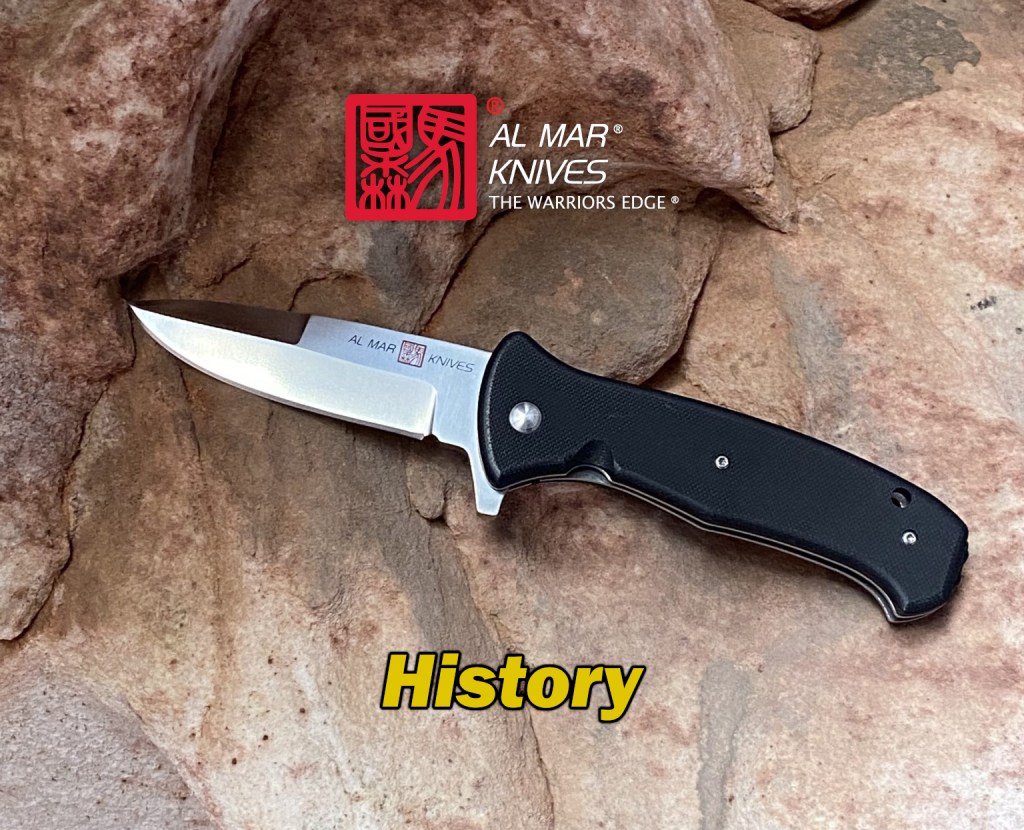
Al Mar Knives holds a respected place in modern knife history, known for blending military influence with refined design and high manufacturing standards. While the brand is not among the oldest knife companies, its impact on folding knife design and quality expectations has been significant. Al Mar’s story is inseparable from its founder, whose background in military service and intelligence shaped the company’s philosophy from the beginning.
The brand’s legacy is one of precision, restraint, and functional elegance.
Al Mar and His Military Background
Al Mar, the man behind the brand, was a decorated U.S. Army officer with an extensive background in special operations and intelligence. He served with the U.S. Army Special Forces and later worked in military intelligence, developing a mindset focused on efficiency, reliability, and discipline.
This background strongly influenced Al Mar’s approach to knife design. He believed that tools should perform their role without excess or unnecessary complexity. Every feature needed a purpose, and every design choice had to support function.
These principles became the foundation of the Al Mar knife brand.
Founding of Al Mar Knives
Al Mar Knives was established in the late 1970s, during a period when interest in tactical and military-inspired equipment was growing. Rather than producing large, aggressive knives, Al Mar focused on compact, efficient designs suitable for real-world use.
From the beginning, the brand emphasized precision manufacturing and high-quality materials. Al Mar sought to create knives that could meet the expectations of professionals while remaining accessible to civilian users.
This focus set the brand apart from many competitors during the same era.
Collaboration With Seki City, Japan
One of the most defining decisions in Al Mar Knives’ history was the choice to manufacture knives in Seki City, Japan. Seki has a centuries-long tradition of knife-making and is known for exceptional craftsmanship and attention to detail.
At a time when Japanese-made knives were not yet widely recognized in the U.S. market, Al Mar’s decision demonstrated foresight. The resulting knives were known for precise fit and finish, smooth action, and consistent quality.
This partnership elevated the brand’s reputation and helped establish Japanese production knives as serious contenders in the premium market.
Design Philosophy and Aesthetic
Al Mar knives are known for their clean lines and restrained styling. Unlike many tactical knives of the era, Al Mar designs avoided exaggerated features or aggressive ornamentation.
Blade shapes were optimized for cutting efficiency, while handles emphasized ergonomics and balance. Lock mechanisms were chosen for strength and reliability rather than novelty.
This minimalist approach appealed to users who valued performance over appearance.
Influence on Folding Knife Development
Al Mar played an important role in raising expectations for production folding knives. During the late 20th century, many folders suffered from inconsistent quality and loose tolerances.
Al Mar knives challenged this norm by demonstrating that production folders could offer precision comparable to custom knives. This influence extended beyond the brand itself, encouraging competitors to improve quality standards.
In this way, Al Mar helped reshape the modern folding knife market.
Popular Models and Recognition
Several Al Mar models became widely respected within the knife community, earning praise for durability and usability. These knives were often carried by professionals and enthusiasts alike.
Collectors also took notice, particularly of early Japanese-made examples, which are now sought after for their craftsmanship and historical significance.
The brand’s consistent quality contributed to long-term loyalty among its user base.
Transition and Brand Evolution
Following Al Mar’s death in 1992, the brand continued under new ownership while maintaining its core design philosophy. Production expanded beyond Japan to include other manufacturing locations, allowing the company to reach a broader market.
While some longtime enthusiasts prefer the earliest Japanese-made knives, the brand has continued to honor Al Mar’s principles of function-first design and restrained aesthetics.
This continuity has helped preserve the brand’s identity across decades.
Al Mar Knives in the Modern Era
Today, Al Mar Knives continues to operate in a highly competitive market. The brand remains associated with clean design, practical blade shapes, and reliable construction.
While trends in knife design have shifted toward both ultra-tactical and ultra-modern styles, Al Mar’s understated approach continues to appeal to users who value balance and intention.
The brand’s knives remain relevant by staying true to their original purpose.
Cultural Impact and Legacy
Al Mar’s influence extends beyond the knives themselves. His emphasis on discipline, efficiency, and respect for craftsmanship resonated with a generation of knife users and makers.
The brand helped bridge the gap between military utility and refined everyday carry, demonstrating that strength and elegance are not mutually exclusive.
This philosophy continues to shape how knives are evaluated today.
A Legacy Defined by Precision
The history of Al Mar Knives is a story of thoughtful design guided by real-world experience. Rooted in military discipline and elevated by skilled craftsmanship, the brand carved out a unique place in knife history.
Rather than chasing trends, Al Mar focused on doing things correctly—and that commitment has endured. The knives bearing his name remain a testament to the idea that true quality lies in restraint, precision, and purpose.
 Knife History
Leave a comment