
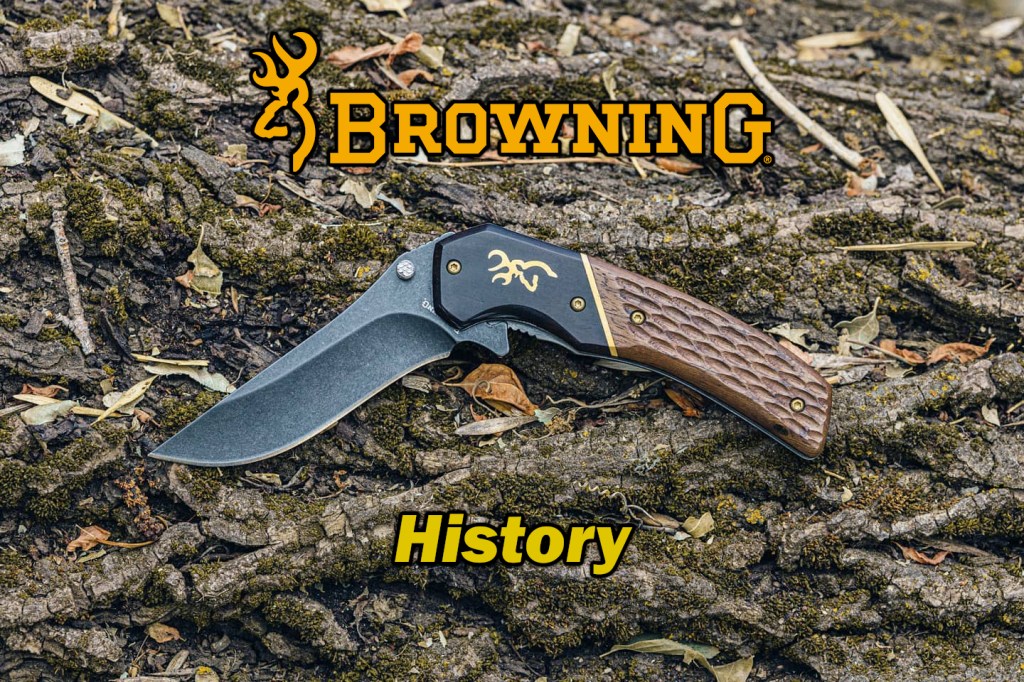
Browning is one of the most recognizable names in the outdoor industry, with a legacy that spans firearms, knives, and a wide range of hunting and camping equipment. While the company is best known for its firearms, Browning’s influence extends far beyond guns alone. Over time, the brand has evolved into a full-spectrum outdoor outfitter, producing knives, axes, hatchets, saws, flashlights, and other essential tools designed for hunters, outdoorsmen, and everyday users.
The history of Browning is a story of innovation, reliability, and adaptation—one that mirrors the changing needs of outdoor enthusiasts over more than a century.
John Moses Browning and the Company’s Origins
The Browning story begins with John Moses Browning, one of the most influential firearms designers in history. Born in 1855 in Utah, Browning grew up in a family of gunsmiths and demonstrated mechanical aptitude at a young age. By his early twenties, he had already designed firearms that would reshape the industry.
In 1878, Browning patented his first rifle, and in 1880 he partnered with Winchester, beginning a long collaboration that produced some of the most iconic firearms ever made. His designs emphasized reliability, simplicity, and real-world performance—principles that would later define the broader Browning brand.
The Browning Arms Company was officially founded in 1927, a year after John Moses Browning’s death, ensuring that his designs and philosophy would continue under the family name.
Expansion Beyond Firearms
For much of the early 20th century, Browning was primarily associated with firearms. However, as hunting and outdoor recreation grew in popularity, the company began expanding into complementary gear.
Hunters didn’t just need rifles and shotguns—they needed dependable tools in the field. Knives for game processing, saws for clearing shooting lanes, axes and hatchets for camp tasks, and flashlights for early morning or late-night work all became natural extensions of Browning’s mission.
This expansion allowed Browning to position itself not just as a firearms manufacturer, but as a complete outdoor brand.
Browning Knives and Field Tools
Browning knives became one of the company’s most recognizable non-firearm product categories. Designed for hunters, anglers, and outdoorsmen, Browning knives emphasized durability, ergonomic handling, and practical blade shapes.
Fixed blades were commonly used for skinning and processing game, while folding knives provided convenient everyday carry options for hunters and outdoor workers. Over time, Browning expanded its knife offerings to include survival knives, camp knives, and utility designs that appealed to a broad audience.
These knives reflected Browning’s core values: tools meant to be used hard, maintained easily, and trusted in real conditions.
Axes and Hatchets for Camp and Field Use
As camping and backcountry hunting grew more popular, Browning expanded into axes and hatchets designed for wood processing, shelter building, and camp maintenance. These tools were built with portability and strength in mind, making them suitable for vehicle-based camps as well as more remote outings.
Browning axes and hatchets often balance traditional design with modern materials, appealing to outdoorsmen who value both performance and brand reliability. Whether splitting kindling or handling heavier camp tasks, these tools align with Browning’s emphasis on functional outdoor gear.
Their inclusion in Browning’s lineup reinforced the brand’s role as a one-stop outfitter for outdoor essentials.
Saws as Essential Outdoor Tools
In addition to edged chopping tools, Browning recognized the importance of saws for outdoor use. Compact folding saws and lightweight cutting tools provide precision and efficiency when clearing branches or processing firewood.
Browning saws fit naturally into the brand’s ecosystem of hunting and camping equipment. They are especially useful in scenarios where noise control, safety, or packability matter more than brute force.
By offering saws alongside axes, hatchets, and knives, Browning ensured that users could select the right tool for each task rather than relying on a single solution.
Flashlights and Illumination Gear
Modern outdoor activity often extends beyond daylight hours, making reliable illumination essential. Browning flashlights became another important part of the company’s gear lineup, serving hunters, campers, and general outdoor users.
These lights are designed with durability and battery efficiency in mind, suitable for early morning hunts, late-night camp tasks, or emergency situations. By adding flashlights to its product range, Browning addressed a critical need that aligns with real-world outdoor use.
This move further reinforced the brand’s commitment to practical, mission-driven gear.
Browning’s Manufacturing Philosophy
Over the decades, Browning has partnered with manufacturers around the world while maintaining strict quality standards. While production locations have evolved, the brand’s emphasis on reliability has remained consistent.
Browning gear is typically designed to be accessible rather than boutique. Rather than focusing on exotic materials or limited runs, the company emphasizes proven designs and broad availability.
This philosophy has allowed Browning to remain relevant to both serious outdoorsmen and casual users.
Brand Recognition and Trust
Few outdoor brands enjoy the level of name recognition that Browning does. The iconic Buck Mark logo has become synonymous with hunting culture, appearing on everything from rifles and knives to apparel and accessories.
This recognition is built on decades of trust. Many customers first encounter Browning through family traditions, hunting trips, or inherited gear. That emotional connection strengthens loyalty and reinforces the brand’s legacy.
When users purchase Browning knives, axes, saws, or flashlights, they are often buying into a story as much as a product.
Browning in the Modern Outdoor Market
Today, Browning operates in a highly competitive market filled with specialized brands. Despite this, the company continues to thrive by offering a broad, well-rounded product lineup that meets real outdoor needs.
Rather than chasing trends, Browning focuses on timeless functionality. Its tools are designed to work across a wide range of environments, from hunting camps and backyards to emergency kits and work trucks.
This versatility is a key reason Browning remains relevant more than a century after its founding.
A Legacy Built on Practical Innovation
The history of Browning is not just about firearms—it is about supporting outdoor life in all its forms. From knives and axes to saws and flashlights, Browning has built a catalog that reflects the realities of hunting, camping, and self-reliance.
By staying true to the principles established by John Moses Browning—function, reliability, and thoughtful design—the brand has created a legacy that continues to evolve without losing its identity.
Browning’s place in outdoor history is secure not because it does everything, but because what it does, it does with purpose.
 Knife History
Leave a comment