
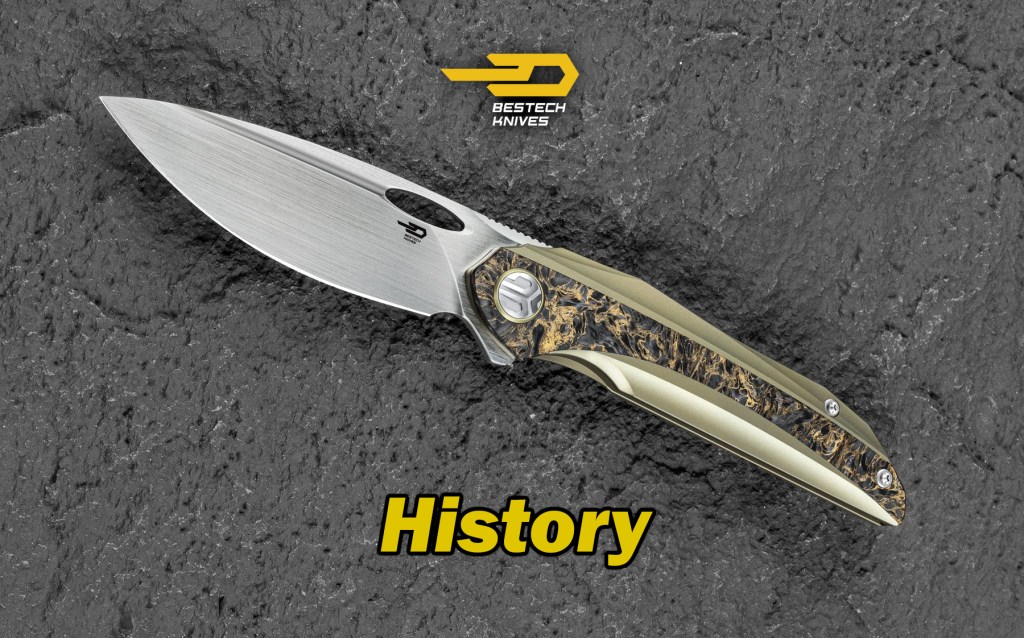
Bestech Knives has emerged as one of the most recognizable names in modern knife manufacturing, particularly within the rapidly evolving world of mid-to-high-end production folders. Known for clean machining, consistent quality control, and collaborations with respected designers, Bestech represents a new generation of knife companies born from advanced manufacturing capability rather than decades-old tradition. Its rise reflects broader shifts in the global knife industry, where precision machining, CNC technology, and international collaboration have reshaped what production knives can be.
Though relatively young compared to legacy brands, Bestech has carved out a distinct identity rooted in technical execution, thoughtful design, and accessibility to serious knife enthusiasts.
Foundations in Modern Manufacturing
Bestech Knives was founded in China in the mid-2010s, during a period when Chinese knife manufacturing was undergoing significant transformation. For many years, China had been associated primarily with low-cost, entry-level knives produced for Western brands. However, improvements in CNC machining, heat treatment, and quality control began to change that perception.
Bestech was created with the intention of competing directly in the enthusiast market rather than operating solely as an OEM manufacturer. From the beginning, the company focused on tight tolerances, premium materials, and modern designs that could stand alongside established American and European brands.
This manufacturing-first foundation allowed Bestech to scale quickly while maintaining consistency.
Early Identity and Design Direction
Rather than relying on traditional blade patterns or heritage designs, Bestech leaned heavily into contemporary aesthetics. Angular handles, clean lines, and modern blade grinds became hallmarks of the brand’s early releases.
Bestech also placed a strong emphasis on precision. Lockup consistency, smooth action, and refined finishing were central to its appeal, especially among knife enthusiasts accustomed to scrutinizing fit and finish.
By targeting experienced users rather than casual buyers, Bestech positioned itself as a serious player from the outset.
Collaboration with Knife Designers
One of the most important factors in Bestech’s growth was its commitment to collaborating with well-known knife designers. By working with designers from around the world, Bestech gained instant credibility within the enthusiast community.
These collaborations allowed Bestech to diversify its lineup while maintaining a cohesive level of quality. Designers brought distinct stylistic influences, while Bestech provided the manufacturing capability to execute those ideas at scale.
This approach also helped bridge the gap between custom knife aesthetics and production affordability, a balance that appealed to collectors and users alike.
Expansion into Premium Materials
As the brand matured, Bestech began incorporating higher-end materials such as titanium handles, carbon fiber, and premium blade steels like S35VN, M390, and CPM 20CV. These materials signaled Bestech’s intent to move beyond entry-level production and into the premium segment.
The consistent execution of these materials reinforced the brand’s reputation. Rather than offering premium features sporadically, Bestech integrated them across much of its lineup.
This commitment helped shift perceptions of Chinese manufacturing within the knife community, demonstrating that quality was no longer limited by geography.
Bestech and the Rise of CNC Precision
Bestech’s success is inseparable from the rise of CNC machining in knife production. Advanced machining allowed for complex handle geometry, internal milling, and precise lock interfaces that would have been difficult or impossible at scale in earlier decades.
The company invested heavily in machining infrastructure, enabling it to maintain repeatable results across large production runs. This consistency became one of Bestech’s defining strengths.
In an industry where small imperfections are often magnified by enthusiasts, Bestech’s precision-oriented approach proved effective.
Introduction of Sub-Brands and Broader Reach
To serve different segments of the market, Bestech introduced sub-brands such as Bestechman. This allowed the company to offer more affordable knives while preserving the premium identity of its main line.
The creation of multiple tiers expanded Bestech’s reach without diluting its core reputation. Entry-level users could experience the brand’s design philosophy, while experienced collectors still had access to higher-end models.
This tiered strategy mirrored approaches used by established global brands across other industries.
Reputation Among Enthusiasts
Within a relatively short time, Bestech earned a reputation for delivering strong value. Reviews frequently highlighted smooth actions, reliable lockup, and thoughtful ergonomics.
While early skepticism existed due to the brand’s origin, consistent performance and transparent collaboration helped overcome those barriers. Bestech knives became regular fixtures in enthusiast discussions, collections, and everyday carry rotations.
The brand’s willingness to listen to feedback and refine designs further strengthened its standing.
Competing in a Crowded Market
The modern knife market is highly competitive, particularly in the mid-to-premium production segment. Bestech competes directly with both Western brands and other high-end Asian manufacturers.
Rather than attempting to outdo competitors through marketing alone, Bestech has remained focused on execution. Reliable quality, contemporary design, and fair pricing continue to be the company’s primary differentiators.
This steady approach has allowed Bestech to remain relevant despite rapidly changing trends.
Bestech’s Role in the Industry Shift
Bestech Knives represents a broader shift in how enthusiasts evaluate knives. Increasingly, users judge knives by performance, fit, and design rather than country of origin.
The brand’s success has helped normalize the idea that high-quality knives can come from anywhere, provided the manufacturing standards are high.
In this way, Bestech has played a role in reshaping industry perceptions and expectations.
Continuing Evolution
Today, Bestech continues to refine its catalog, introducing new models while maintaining consistent production standards. The company remains active in designer collaborations and continues to explore new materials and locking mechanisms.
While trends come and go, Bestech’s emphasis on precision and modern design provides a stable foundation for long-term growth.
Rather than chasing novelty, the brand has focused on incremental improvement and reliability.
A Modern Brand with a Lasting Impact
The history of Bestech Knives is a story of modern manufacturing meeting enthusiast-driven design. Built on precision machining, thoughtful collaboration, and a clear understanding of its audience, Bestech has established itself as a respected name in contemporary knife culture.
Though young compared to legacy brands, Bestech’s influence is undeniable. Its knives reflect the realities of modern production and global collaboration, proving that craftsmanship in the modern era is defined not by location, but by execution, consistency, and intent.
 Knife History
Leave a comment