
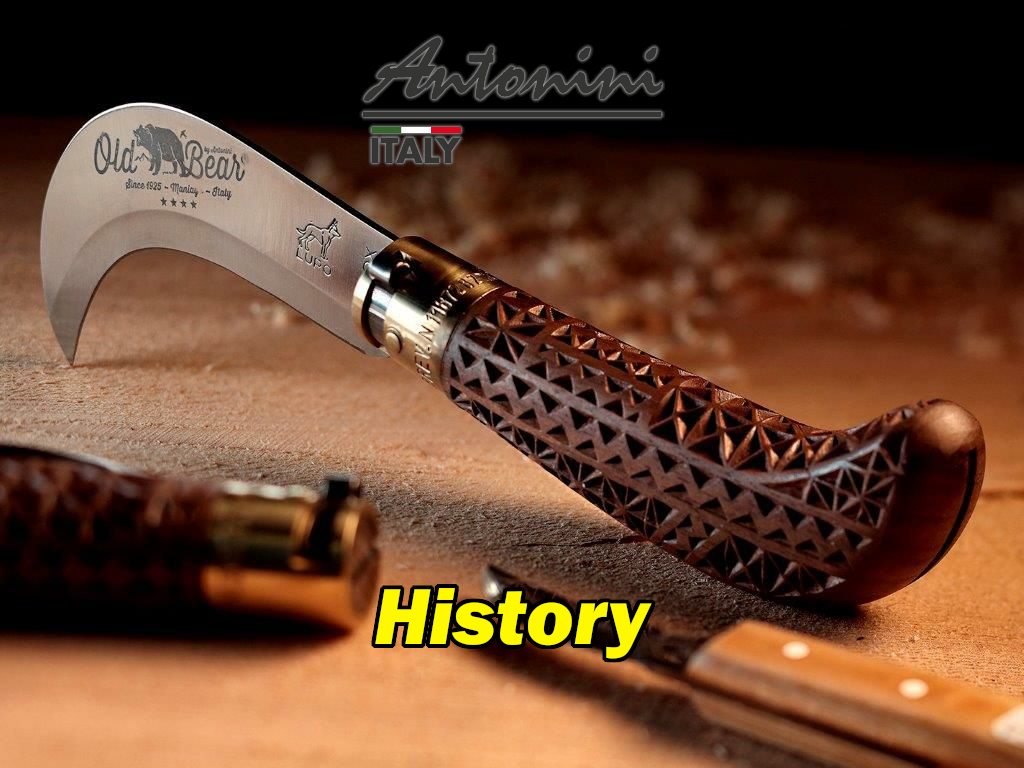
Antonini Knives represents a lesser-known but deeply rooted chapter in Italian knife history. While it may not carry the global recognition of some luxury Italian brands, Antonini has earned respect through consistency, practicality, and a strong connection to regional craftsmanship. The company’s story reflects Italy’s long-standing tradition of producing functional tools designed for daily life rather than display.
At its core, Antonini Knives is about utility shaped by heritage.
Origins in Maniago, Italy
Antonini Knives was founded in Maniago, Italy, a town often referred to as the “City of Knives.” Maniago’s knife-making tradition dates back to the Middle Ages, when water-powered forges along the Colvera River supported blacksmiths producing swords, agricultural tools, and knives.
Growing up in this environment meant that knife making was not an abstract trade but a way of life. Antonini emerged from this culture with a focus on practical cutting tools intended for farmers, workers, and everyday users.
This regional influence continues to define the brand’s identity.
Early Focus on Practical Knives
From its earliest years, Antonini concentrated on producing straightforward, reliable knives. These were not luxury items, but working tools designed for daily tasks such as food preparation, field work, and general utility.
Traditional slipjoint folders, fixed-blade utility knives, and regional Italian patterns formed the backbone of early production. Simplicity, ease of maintenance, and durability were prioritized over decoration or experimentation.
This approach allowed Antonini to serve both local markets and broader European demand.
Emphasis on Traditional Italian Patterns
Antonini has long been associated with classic Italian knife styles. Many of its designs reflect patterns that have been carried for generations, including slim folding knives with simple mechanisms and efficient blade profiles.
These knives were often carried as everyday tools rather than specialty equipment. Their understated appearance made them practical and socially acceptable in a wide range of settings, contributing to their popularity.
By continuing to produce these traditional patterns, Antonini helped preserve regional knife culture in a modernizing world.
Manufacturing Philosophy and Materials
Unlike brands that chased innovation for its own sake, Antonini focused on refining proven designs. The company emphasized consistent heat treatment, proper blade geometry, and reliable assembly.
Over time, Antonini adopted modern materials where appropriate, including stainless steels that improved corrosion resistance while maintaining ease of sharpening. Handle materials ranged from traditional wood and horn to modern synthetics, depending on the intended use.
This balanced approach allowed the brand to remain relevant without abandoning its roots.
Expansion Beyond Local Markets
As international interest in European knives grew, Antonini expanded beyond Italy’s borders. The brand became known in other parts of Europe and eventually reached markets in North America and beyond.
Antonini knives appealed to users seeking authentic European craftsmanship without the premium pricing associated with luxury brands. This positioned the company as an accessible entry point into Italian knife tradition.
Their knives were often appreciated for being honest tools rather than collector pieces.
Relationship With Outdoor and Utility Use
While Antonini is best known for everyday carry and utility knives, the brand has also produced models suited for outdoor use. These included fixed blades designed for camping, hunting, and light bushcraft tasks.
Rather than competing directly with heavy-duty survival knife brands, Antonini maintained its focus on practical cutting performance. Their outdoor knives favored manageable sizes and straightforward designs.
This consistency reinforced the brand’s identity across different product categories.
Adaptation in a Changing Industry
The knife industry changed significantly in the late 20th and early 21st centuries, with increased competition from mass-produced imports and high-end custom makers. Antonini responded by maintaining production standards while adjusting designs to meet modern expectations.
Locking mechanisms became more common, and finishes were refined, but the core philosophy remained unchanged. The company continued to prioritize function, reliability, and affordability.
This adaptability helped Antonini survive while many traditional makers disappeared.
Antonini Knives Today
Today, Antonini remains part of Maniago’s living knife-making tradition. The brand continues to produce a range of folding and fixed-blade knives that emphasize everyday usability.
Modern Antonini knives reflect decades of accumulated experience, blending traditional patterns with contemporary materials and production techniques. While not flashy, they are respected for their practicality and honest construction.
For many users, this understated reliability is exactly the appeal.
Place in Knife History
Antonini Knives occupies an important position in knife history as a representative of working-class craftsmanship. The brand exemplifies how regional knife makers contributed to everyday life rather than fame or spectacle.
By staying true to practical design and Italian tradition, Antonini preserved a style of knife making that prioritizes usefulness over trends.
This quiet consistency is a form of legacy in itself.
A Tradition That Endures
The history of Antonini Knives is not defined by dramatic reinvention or celebrity status, but by steady dedication to craft. Rooted in Maniago’s centuries-old blade-making culture, the brand has remained focused on producing tools that people actually use.
In an industry often driven by extremes, Antonini stands as a reminder that well-made, thoughtfully designed knives never go out of style.
 Knife History
Leave a comment