
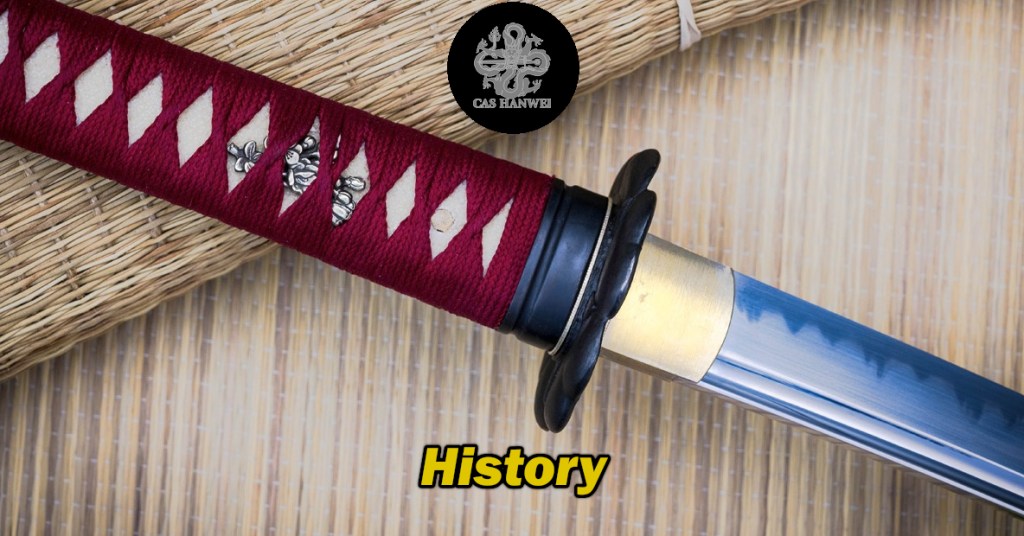
CAS Hanwei occupies a unique and influential position in the modern sword and bladed-weapons industry. Best known for its historically inspired swords, martial arts weapons, and training blades, Hanwei helped make traditionally forged swords accessible to collectors, practitioners, and historians around the world. At a time when authentic sword craftsmanship was becoming increasingly rare or prohibitively expensive, CAS Hanwei bridged the gap between ancient techniques and modern production.
The company’s story is deeply tied to its founder’s dedication to traditional forging methods and his belief that functional, historically informed blades still had a place in the modern era.
The Vision of Paul Chen
The origins of CAS Hanwei begin with Paul Chen, a Chinese-born swordsmith whose passion for blades started at a young age. Chen grew up fascinated by the legendary swords of Chinese history and the cultural significance attached to them. As he studied traditional metallurgy and forging techniques, he became increasingly concerned that authentic sword-making knowledge was fading in the face of mass production and decorative reproductions.
Rather than allowing these traditions to disappear, Chen sought to preserve them by adapting ancient methods to modern manufacturing realities. His goal was not simply to create display pieces, but functional swords that respected historical design, balance, and performance.
This vision would become the foundation of Hanwei.
Founding of Hanwei and Early Development
Paul Chen established his forge in Dalian, China, during the late 20th century, a period when China was reopening to international trade and manufacturing opportunities. The forge, later known as Hanwei, began producing swords using a combination of traditional hand-forging techniques and modern quality control.
Early production focused heavily on Chinese sword forms, including jian and dao styles. These blades were designed with proper heat treatment, distal taper, and handling characteristics, setting them apart from decorative replicas common at the time.
As word spread among martial artists and collectors, Hanwei’s reputation for functional, affordable swords began to grow.
The Role of CAS Iberia
Hanwei’s expansion into Western markets was made possible through a partnership with CAS Iberia, a U.S.-based importer and distributor of martial arts equipment and weapons. CAS Iberia became the exclusive distributor of Hanwei products in North America, leading to the combined name CAS Hanwei.
This partnership allowed Hanwei to reach a global audience while maintaining consistent branding, quality standards, and customer support. CAS Iberia’s experience with Western martial arts communities helped guide Hanwei’s expansion into new blade styles and historical traditions.
Together, CAS Hanwei transformed the accessibility of functional swords worldwide.
Expansion into Japanese Swords
One of the most significant chapters in CAS Hanwei’s history was its expansion into Japanese sword production. Japanese swords, particularly katana, carry immense cultural and technical significance, and producing functional examples required deep respect for traditional methods.
Hanwei began producing katana using techniques such as differential heat treatment, clay tempering, and folded steel construction. These swords were designed to replicate traditional geometry, balance, and cutting ability while remaining affordable compared to custom Japanese-made blades.
For many practitioners of Japanese martial arts, CAS Hanwei swords became a gateway into serious training and study.
Influence on Western Martial Arts and Historical European Swords
As interest in Historical European Martial Arts grew, CAS Hanwei expanded into medieval and Renaissance-era European swords. Longswords, arming swords, rapiers, and sabers became part of the lineup, designed with input from historians and practitioners.
These swords emphasized proper weight distribution and handling rather than exaggerated fantasy aesthetics. While not perfect replicas, they represented a significant improvement over earlier decorative offerings and played a major role in supporting the growth of Western martial arts practice.
Hanwei’s involvement helped legitimize the use of production swords for historical training.
Balancing Tradition and Modern Production
A defining feature of CAS Hanwei’s success is its ability to balance traditional craftsmanship with scalable production. While many steps in the forging process remain hands-on, modern equipment is used to ensure consistency, safety, and repeatability.
Blades are heat-treated using carefully controlled processes, and final assembly is closely inspected to ensure functionality. This hybrid approach allows Hanwei to preserve essential forging principles while meeting global demand.
This balance has become a defining model for modern sword manufacturing.
Reputation Among Collectors and Practitioners
Over time, CAS Hanwei developed a strong reputation among collectors, martial artists, and reenactors. While high-end collectors may still seek fully custom blades, Hanwei swords are widely respected for their value, reliability, and historical influence.
Many practitioners trained and tested their first sharp swords using Hanwei products, making the brand deeply tied to personal milestones within martial arts communities.
The company’s consistent presence at the intersection of history and accessibility has earned lasting respect.
Challenges and Criticism
Like any large-scale producer, CAS Hanwei has faced criticism over the years, particularly regarding quality consistency across large production runs. However, the company has continually refined its processes, responding to feedback from distributors and users.
More importantly, Hanwei’s impact cannot be measured solely by individual products. Its role in reshaping the sword market and making functional blades widely available represents a fundamental shift in the industry.
Legacy in the Modern Blade World
CAS Hanwei’s influence extends far beyond its own catalog. By proving that traditionally inspired swords could be produced at scale without losing functional integrity, Hanwei helped change perceptions about modern sword manufacturing.
Many contemporary sword makers, trainers, and enthusiasts owe their entry into the field to CAS Hanwei products. The brand helped preserve interest in historical swordsmanship during a period when such knowledge might otherwise have faded further into obscurity.
Preserving the Past Through Practical Craft
The history of CAS Hanwei is ultimately about preservation through use. Rather than confining swords to museums or elite collectors, Paul Chen and his partners made them tools for learning, training, and appreciation.
By combining ancient forging principles with modern production methods, CAS Hanwei ensured that swords remained living objects rather than forgotten artifacts. Its legacy is not just found in steel, but in the countless practitioners, collectors, and historians who continue to engage with the blade traditions Hanwei helped keep alive.
 Knife History
Leave a comment