
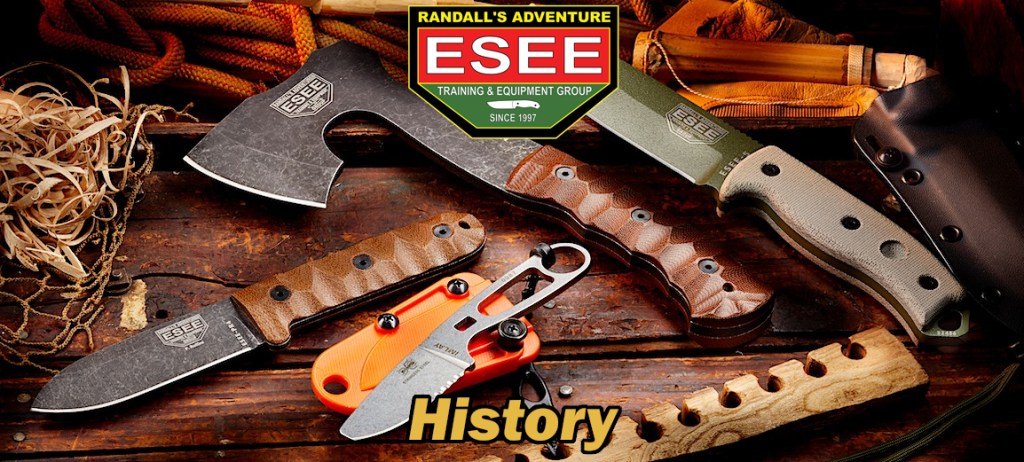
ESEE Knives has earned a respected place in the modern knife world by doing something deceptively simple: building tools that work when failure is not an option. Unlike brands that began as factory cutlery companies or decorative blade makers, ESEE was born directly from survival training and real-world field experience. Its knives were not designed to impress on a shelf but to perform under extreme conditions, where reliability can mean the difference between safety and disaster.
The story of ESEE Knives is closely tied to education, hard use, and a philosophy that values toughness, simplicity, and accountability above all else.
Origins in Survival Training
The roots of ESEE Knives trace back to the 1990s with Randall’s Adventure & Training, commonly known as RAT. Founded by Jeff Randall and Mike Perrin, RAT began as a survival training organization rather than a knife company. The instructors worked extensively in remote and hostile environments, particularly in Central and South America, teaching survival, escape and evasion, and tracking skills.
During this time, Randall and Perrin relied on knives daily for demanding tasks. They quickly realized that many commercially available knives failed under prolonged, abusive use. Handles loosened, blades snapped, and designs proved impractical in real survival situations. Instead of adapting their techniques to the tools available, they decided to create tools that matched their needs.
This decision marked the beginning of what would eventually become ESEE Knives.
Early Knife Designs and Practical Focus
The first knives associated with RAT were designed purely as tools for instructors and students. These early designs prioritized strength, ease of maintenance, and versatility. Blade shapes were straightforward, focusing on cutting efficiency and durability rather than aggressive styling.
Thick spines, full tang construction, and simple handle designs became central features. The knives were intended to handle batoning, chopping, shelter construction, and food preparation without compromise. This utilitarian approach reflected the realities of survival training, where equipment is pushed far beyond normal use.
Word spread quickly among students and professionals who trained with RAT, creating demand for these purpose-built knives.
The Birth of the ESEE Brand
As demand grew beyond training circles, the knife line evolved into a standalone brand. Initially known as RAT Cutlery, the company later rebranded as ESEE Knives. The name “ESEE” references Escuela de Supervivencia, Escape and Evasion concepts central to the founders’ training philosophy.
The rebrand clarified the company’s mission and helped distinguish it within the growing survival and outdoor knife market. While many brands used the language of survival in their marketing, ESEE’s credibility came directly from lived experience.
The brand’s identity became inseparable from the principles taught in RAT survival courses.
Commitment to Simplicity and Reliability
ESEE Knives built its reputation on designs that avoided unnecessary complexity. The company intentionally stayed away from moving parts, fragile materials, or overly specialized features that could fail in the field.
Most ESEE knives are fixed blades with straightforward blade profiles such as drop points and modified spear points. These shapes offer versatility for both fine cutting and heavy-duty tasks. Handle materials were selected for durability and grip security rather than appearance.
This emphasis on simplicity resonated with survivalists, military personnel, and outdoorsmen who valued tools that worked regardless of conditions.
Manufacturing Partnerships and Quality Control
Unlike some knife companies that produce entirely in-house, ESEE partnered with established manufacturers to produce its designs. One of the most significant partnerships was with Rowen Manufacturing in the United States, which produced many of ESEE’s fixed blades.
This collaboration allowed ESEE to maintain high quality standards while focusing on design and testing. Heat treatment, fit, and finish were closely monitored to ensure consistency across production runs.
By combining experienced design with reliable manufacturing, ESEE maintained credibility among serious users.
The No-Questions-Asked Warranty
One of the most distinctive aspects of ESEE Knives’ history is its warranty policy. ESEE became well known for offering a no-questions-asked lifetime warranty. If a knife breaks, the company replaces it, regardless of how it was used.
This warranty is not just a marketing tool; it reflects confidence in the product and respect for the user. ESEE’s founders understood that their knives would be pushed to extremes, and they were willing to stand behind them fully.
This policy helped build deep trust and loyalty within the knife community.
Influence in the Survival and Bushcraft Communities
As survival skills gained mainstream attention through books, television, and online content, ESEE Knives became a staple in the bushcraft and preparedness communities. Many instructors and content creators adopted ESEE knives as primary teaching tools.
Their straightforward designs made them easy to understand and maintain, especially for beginners. At the same time, experienced users appreciated their toughness and reliability.
ESEE knives became known as tools you could depend on without worrying about damaging a collectible or expensive piece.
Military and Professional Use
Although ESEE does not aggressively market itself as a military supplier, its knives have found their way into the hands of military and law enforcement personnel. The practical designs, durable construction, and strong warranty make them appealing for professional use.
Rather than chasing contracts or producing ceremonial blades, ESEE focused on serving individuals who needed dependable tools. This grassroots adoption reinforced the brand’s authenticity.
Evolution of the Product Line
Over time, ESEE expanded its lineup to include a range of blade sizes and configurations. Smaller models addressed the need for compact utility knives, while larger blades catered to users who needed chopping power.
Despite this expansion, the core philosophy remained unchanged. New designs were evaluated based on function and durability rather than market trends. Each knife was intended to serve a real purpose in the field.
This disciplined approach helped ESEE avoid dilution of its brand identity.
Criticism and Honest Design
ESEE Knives has faced criticism for being conservative in its material choices. Some enthusiasts prefer advanced steels or lighter constructions, while ESEE continues to prioritize toughness and ease of sharpening.
However, this philosophy aligns with the brand’s mission. In survival situations, the ability to maintain an edge in the field often matters more than maximum edge retention. ESEE’s design choices reflect practical priorities rather than technical prestige.
This honesty has earned respect even from those who prefer different tools.
Cultural Impact and Legacy
ESEE Knives has influenced how many people think about survival tools. By grounding its designs in real-world experience, the brand helped shift attention away from gimmicks and toward functionality.
Its knives are often recommended not because they are the most advanced or expensive, but because they work. This reputation has allowed ESEE to remain relevant in a rapidly changing knife industry.
For many users, an ESEE knife represents preparedness, self-reliance, and trust.
A Brand Built on Accountability
The history of ESEE Knives is defined by accountability to the user. From its origins in survival training to its modern presence in the knife world, the brand has consistently placed performance ahead of appearance.
ESEE knives are tools meant to be used, abused, and relied upon without hesitation. Their success comes not from flashy innovation, but from a deep understanding of what matters when conditions turn against you.
That commitment to real-world function ensures ESEE Knives will remain an important name in knife history for years to come.
 Knife History
Leave a comment