
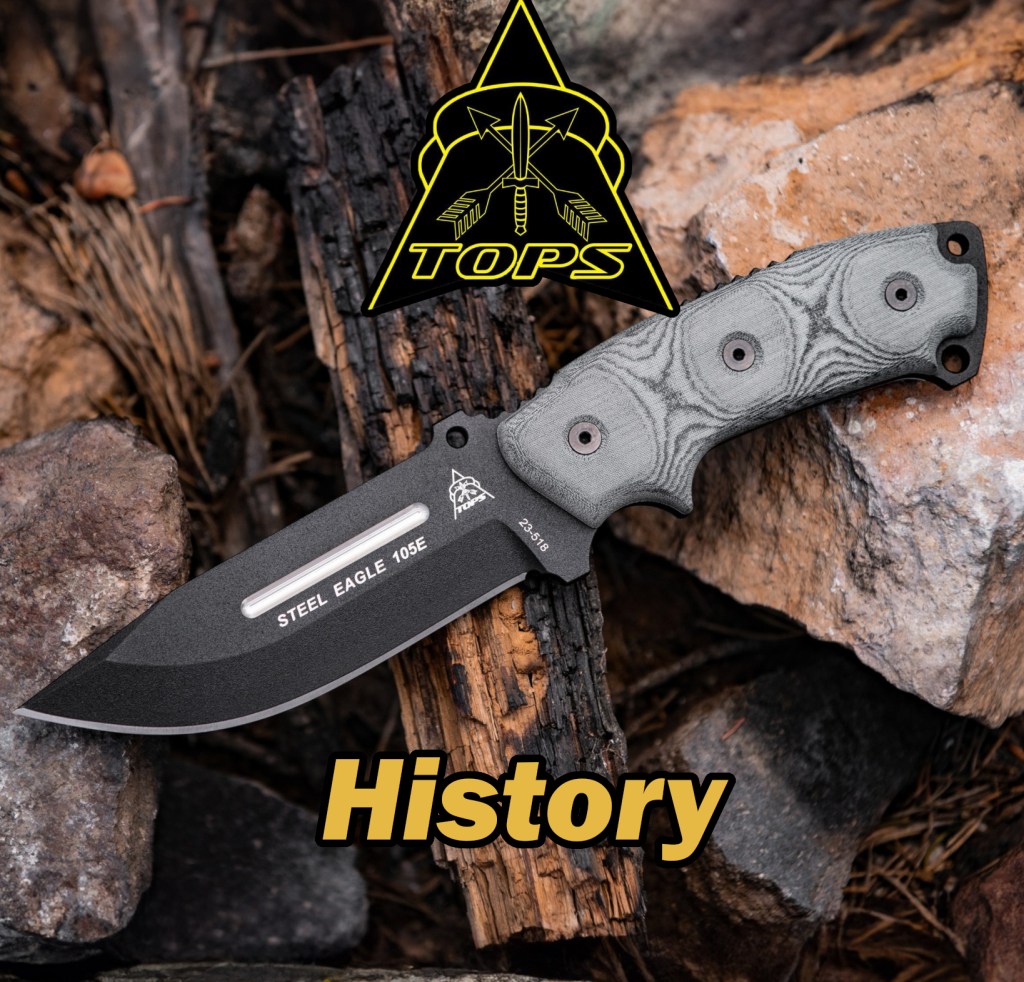
TOPS Knives occupies a distinct place in the modern knife world. Unlike brands rooted in century-old factories or mass-market production, TOPS Knives emerged from firsthand experience in harsh environments where failure was not an option. From its earliest days, the company focused on designing knives as life-saving tools rather than accessories, drawing heavily from military, law enforcement, and survival expertise.
Over time, TOPS Knives became synonymous with rugged fixed blades designed to endure extreme conditions, earning a reputation among professionals and outdoorsmen who prioritize reliability above all else.
Origins in Idaho and Real-World Experience
TOPS Knives was founded in 1998 in Idaho Falls, Idaho, by Mike Fuller. Fuller’s background included work with law enforcement, military personnel, and survival instructors, and he saw a gap in the knife market. Many knives looked impressive but failed under hard use, especially in combat or wilderness survival situations.
Rather than starting with aesthetics or trends, TOPS Knives was built around a simple principle: knives should be designed by people who use them in real life. Fuller surrounded himself with professionals who had practical experience in combat, tracking, survival training, and emergency response. These individuals were not marketers or designers first—they were end users.
This foundation set TOPS Knives apart from many contemporary knife companies.
A Design Philosophy Rooted in Survival
From the beginning, TOPS Knives emphasized function over appearance. Blade shapes were chosen for utility, strength, and versatility. Handles were designed to remain secure in wet, cold, or gloved hands. Materials were selected for toughness rather than novelty.
Most early TOPS knives were thick-spined fixed blades intended for hard use tasks such as chopping, prying, batoning, and defensive applications. These were knives meant to be relied upon in the field, often as the primary cutting tool in survival scenarios.
This no-nonsense approach attracted attention from military and law enforcement communities, who recognized the value of tools designed with their needs in mind.
Early Military and Law Enforcement Adoption
As TOPS Knives gained traction, its reputation spread among military units, special operations personnel, and law enforcement officers. Many early designs were influenced directly by feedback from individuals actively deployed or working in demanding environments.
Rather than producing a single “tactical” knife, TOPS developed multiple models tailored to specific roles. Some were optimized for combat and self-defense, while others focused on survival, escape and evasion, or utility tasks.
This collaborative design process became a hallmark of the brand. TOPS knives were often named after their intended purpose or the individuals who helped develop them, reinforcing the connection between tool and mission.
Made in the USA Commitment
One of the defining aspects of TOPS Knives is its commitment to American manufacturing. From its early days, the company chose to produce its knives in the United States, even as many competitors shifted overseas to reduce costs.
Manufacturing in Idaho allowed TOPS to maintain quality control and respond quickly to feedback. It also reinforced the brand’s identity as a producer of serious tools rather than disposable products.
For many customers, this commitment to domestic production became a key reason for choosing TOPS knives over alternatives.
Growth Through the Survival Movement
The late 1990s and early 2000s saw a growing interest in survival training, bushcraft, and preparedness. Television shows, books, and training schools popularized wilderness skills and self-reliance, bringing new attention to knives designed for extreme use.
TOPS Knives was well positioned to benefit from this movement. Its designs aligned perfectly with the mindset of preparedness and self-sufficiency. Knives such as heavy choppers, survival blades, and compact backup knives gained popularity among outdoor enthusiasts and survival instructors.
Rather than watering down its designs to appeal to casual users, TOPS leaned into its identity as a hard-use brand.
Collaboration with Instructors and Experts
One of TOPS Knives’ most distinctive traits is its extensive collaboration with subject-matter experts. Over the years, the company has worked with survival instructors, martial artists, former military personnel, and law enforcement trainers to develop specialized knives.
These collaborations resulted in designs tailored for very specific tasks, such as tracking, skinning, defensive carry, and escape tools. This approach reinforced the idea that TOPS knives were purpose-built rather than generic.
Many models carry the names or initials of their designers, giving credit to the individuals whose experience shaped the final product.
Materials and Construction Choices
TOPS Knives has traditionally favored steels known for toughness and ease of maintenance. Rather than chasing the latest high-end powdered steels, the company often selected materials that could be field-maintained and withstand abuse.
Blade thickness is another defining characteristic. TOPS knives are known for their robust construction, often featuring thick spines and full tang designs. This emphasis on strength sometimes results in heavier knives, but it aligns with the brand’s focus on reliability under extreme conditions.
Handle materials and textures are chosen to maximize grip security, even when dirty or wet.
Role in Tactical and Civilian Markets
Although deeply rooted in military and law enforcement communities, TOPS Knives also found a strong following among civilians. Hunters, bushcrafters, and outdoor professionals appreciated the same qualities that appealed to soldiers and officers.
At the same time, the brand became popular among preparedness-minded individuals who valued tools capable of handling worst-case scenarios. TOPS knives were often marketed as “last-ditch” tools—knives you would trust when nothing else worked.
This crossover appeal helped TOPS build a loyal customer base that extended beyond professional users.
Evolution and Expansion of the Product Line
As the knife industry evolved, TOPS Knives expanded its catalog to include a wider range of blade sizes and styles. While large fixed blades remained central to the brand, smaller utility knives and neck knives were added to meet changing carry preferences.
Despite this expansion, TOPS maintained its core philosophy. Even smaller models were designed with strength and durability in mind, avoiding fragile constructions or decorative features.
The company also refined its manufacturing processes over time, improving fit and finish while staying true to its rugged identity.
Criticism and Brand Identity
Like any brand with a strong identity, TOPS Knives has faced criticism. Some users argue that certain designs are overbuilt for everyday tasks, or heavier than necessary. Others prefer more refined or minimalist aesthetics.
However, these criticisms often stem from a misunderstanding of the brand’s purpose. TOPS does not aim to create lightweight gentleman’s knives or fashion-forward designs. Its focus has always been on tools built to survive extreme use.
This clarity of purpose has helped the brand maintain credibility even as trends shift.
Cultural Impact and Legacy
TOPS Knives has influenced the broader knife industry by emphasizing user-driven design and real-world testing. Its collaborative approach encouraged other brands to involve professionals in the development process.
For many knife enthusiasts, TOPS represents authenticity. The brand’s knives are seen as honest tools, designed without unnecessary frills and built with a clear mission in mind.
Its presence in survival schools, training programs, and field kits around the world speaks to the trust users place in the brand.
A Brand Forged by Purpose
The history of TOPS Knives is a story of practicality, experience, and commitment to function. From its beginnings in Idaho to its place in modern tactical and survival communities, the brand has remained focused on what matters most when conditions are unforgiving.
TOPS Knives did not rise by following trends or chasing mass appeal. Instead, it earned its reputation by listening to those who depend on their tools in the real world.
That dedication to purpose continues to define TOPS Knives and secures its place in knife history as a brand built not for show, but for survival.
 Knife History
Leave a comment