
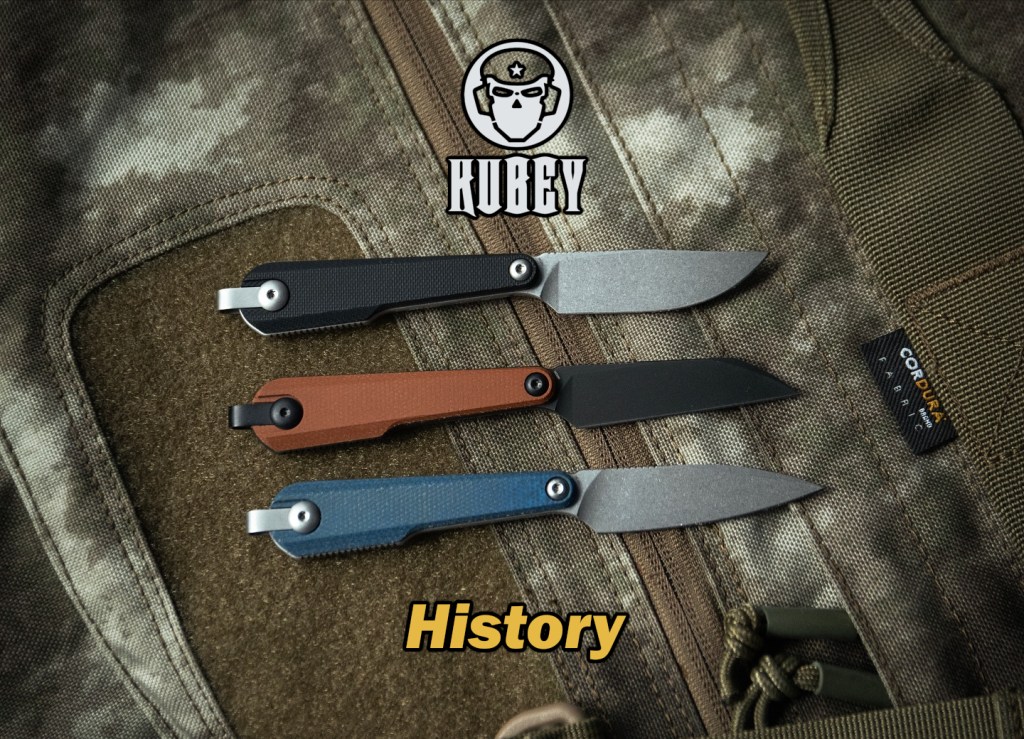
KUBEY Knives represents a newer generation of knife companies—brands that emerged during the global expansion of precision CNC manufacturing and the rise of everyday carry culture. While KUBEY does not trace its roots back centuries like traditional European or American cutlery houses, its story reflects an important shift in the knife industry: the transition from anonymous contract manufacturing to distinct, design-driven global brands.
Over time, KUBEY Knives evolved from a behind-the-scenes manufacturer into a recognized name in the modern EDC market, known for blending clean design, contemporary materials, and accessible pricing.
Origins in Manufacturing Rather Than Marketing
KUBEY Knives originated in China, emerging from a background deeply rooted in OEM and ODM knife manufacturing. Before the KUBEY name appeared on blades, the company was already involved in producing knives and components for other brands. This experience provided a strong technical foundation, including expertise in CNC machining, heat treatment, and modern production techniques.
Unlike companies founded by individual makers or outdoorsmen, KUBEY’s beginnings were shaped by manufacturing efficiency and technical capability. This allowed the brand to understand the demands of large-scale production long before it entered the consumer-facing market under its own name.
When KUBEY Knives began branding its own products, it did so with a clear understanding of how to balance cost, quality, and consistency.
Entering the Global Knife Market
KUBEY Knives began gaining wider attention in the late 2010s as interest in pocket knives surged worldwide. Online communities, social media, and knife review platforms created opportunities for newer brands to compete with established names on a global scale.
KUBEY positioned itself strategically within this environment. Rather than competing directly with budget knives at the lowest end of the market or premium brands at the highest, the company aimed for the middle ground—offering modern designs, upgraded materials, and solid construction at approachable price points.
This positioning allowed KUBEY to appeal to both newer enthusiasts and experienced users looking for value-focused EDC options.
Focus on Modern Folding Knives
From the start, KUBEY Knives focused heavily on folding knives designed for everyday carry. Clean blade shapes, streamlined handles, and practical dimensions became central to the brand’s identity.
Many KUBEY designs reflect contemporary EDC preferences, including drop point and modified sheepsfoot blades, slim profiles, and pocket-friendly ergonomics. Rather than chasing novelty, the company emphasized functionality that fit modern lifestyles.
This focus aligned well with changing consumer habits, as more users sought knives that balanced utility, comfort, and aesthetics for daily use rather than specialized outdoor tasks.
Adoption of Modern Materials
A key factor in KUBEY Knives’ rise was its early adoption of modern knife materials. The company frequently used stainless steels that offered a balance of edge retention, corrosion resistance, and ease of maintenance, making them suitable for everyday users.
Handle materials such as G10, micarta, and later titanium became common across KUBEY’s lineup. These materials, once associated primarily with higher-priced knives, helped elevate the brand’s perceived value without pushing products into premium price territory.
By combining contemporary materials with efficient manufacturing, KUBEY was able to deliver knives that felt current and competitive within the global market.
Design Evolution and Brand Identity
In its early years, KUBEY Knives experimented with a variety of designs as it refined its identity. Over time, a consistent design language emerged—one centered on simplicity, symmetry, and practicality.
KUBEY knives typically avoid excessive ornamentation. Handles are shaped for comfort rather than dramatic flair, and blade finishes tend to be understated. This restrained approach has helped the brand appeal to users who prefer clean, functional aesthetics.
As the brand matured, its designs became more cohesive, reflecting a clearer understanding of its audience and strengths.
Manufacturing Capabilities and Quality Control
One of KUBEY Knives’ greatest strengths lies in its manufacturing infrastructure. Drawing on its OEM background, the company invested heavily in CNC machining and quality control processes.
This focus allowed KUBEY to maintain consistency across production runs, an important factor in building trust with consumers. Tight tolerances, smooth action, and reliable lockup became expected features rather than exceptions.
While early skepticism toward emerging overseas brands existed within parts of the knife community, consistent quality helped KUBEY earn credibility over time.
Competing in a Crowded Market
The modern knife industry is highly competitive, with new brands entering the market regularly. KUBEY Knives distinguished itself by maintaining a clear value proposition rather than trying to appeal to everyone.
Instead of releasing dozens of overlapping models, KUBEY focused on refining core designs and responding to user feedback. This measured growth strategy helped the brand avoid the pitfalls of overextension while steadily expanding its catalog.
By staying attentive to trends without chasing them blindly, KUBEY remained relevant as the EDC landscape evolved.
Reception Among Knife Enthusiasts
KUBEY Knives gradually gained recognition within online knife communities, where users frequently share detailed reviews and comparisons. Many enthusiasts noted the brand’s strong build quality relative to price, especially in areas such as action smoothness and fit and finish.
While KUBEY does not market itself as a premium or collector-focused brand, its knives often earn praise as reliable daily users. This reputation aligns well with the brand’s practical origins and design philosophy.
As trust grew, KUBEY became a common recommendation for those seeking modern EDC knives without premium pricing.
Expansion and Refinement
As the brand matured, KUBEY Knives expanded into additional blade sizes, lock types, and handle materials. While folding knives remained the core of its lineup, the company explored variations that allowed users to choose knives better suited to their specific needs.
Throughout this expansion, KUBEY maintained its focus on usability and durability rather than dramatic reinvention. Incremental improvements to design, ergonomics, and materials reflected a long-term approach to brand development.
This steady refinement helped KUBEY avoid becoming defined by a single model while strengthening its overall identity.
The Role of Global Manufacturing in Knife History
KUBEY Knives represents a broader shift in knife history toward globally distributed manufacturing. Its success highlights how modern brands can leverage advanced production techniques to deliver quality tools across international markets.
While traditional knife histories often focus on regional craftsmanship, brands like KUBEY illustrate how the industry has adapted to a globalized economy. In doing so, they have expanded access to well-made knives for a wider audience.
Understanding KUBEY’s history requires recognizing this modern context rather than judging it by older standards alone.
A Modern Brand with a Practical Focus
The history of KUBEY Knives is not defined by centuries-old traditions or famous military contracts. Instead, it is the story of a brand that emerged from manufacturing expertise and grew alongside modern EDC culture.
By focusing on clean design, consistent quality, and accessible pricing, KUBEY carved out a space in a crowded market. Its knives reflect contemporary needs—tools meant to be carried, used, and relied upon in everyday life.
As the knife world continues to evolve, KUBEY Knives stands as an example of how modern manufacturing and thoughtful design can build a lasting presence in blade history.
 Knife History
Leave a comment