
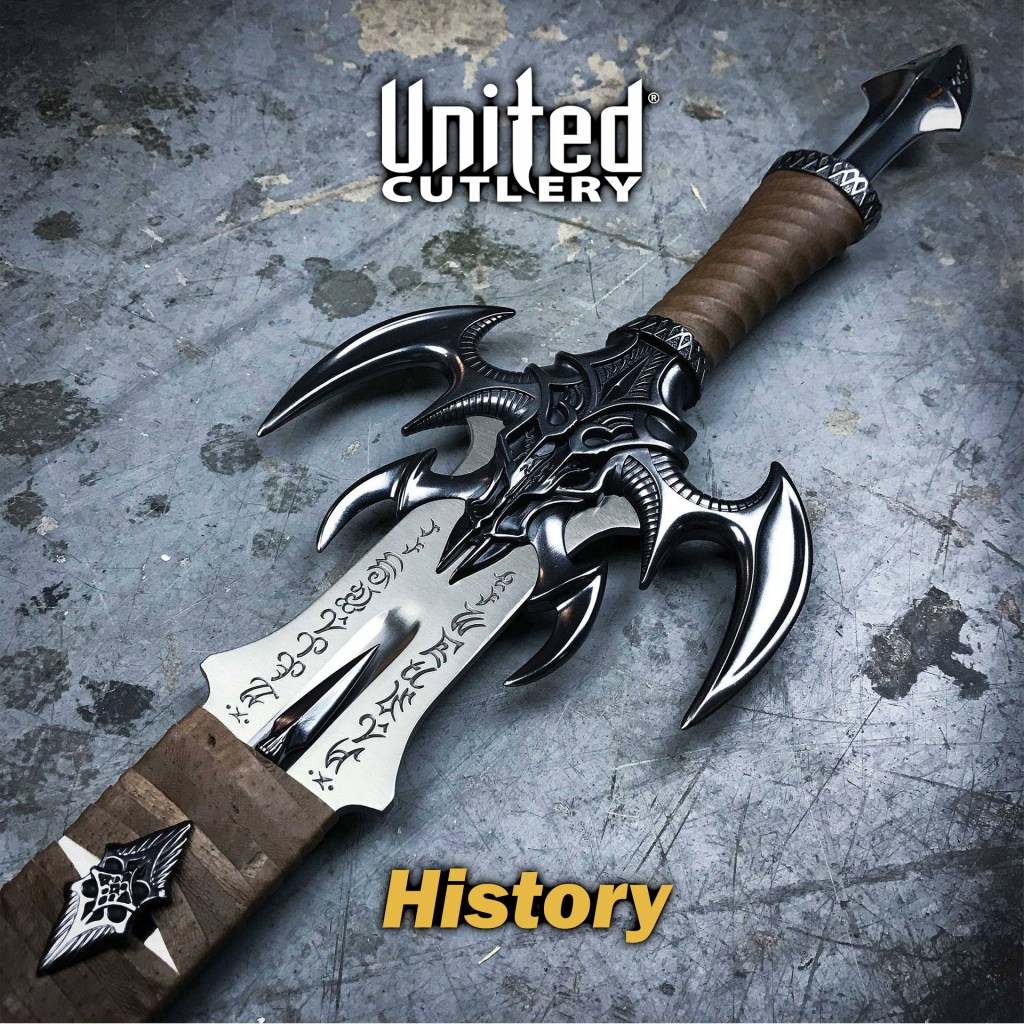
United Cutlery occupies a unique place in modern knife and sword history. Unlike many brands rooted in centuries-old blade traditions or regional craftsmanship, United Cutlery rose to prominence through innovation, mass production, and an ability to tap into popular culture. Over the decades, the company became one of the most recognizable names in fantasy swords, movie replicas, and themed blades, helping introduce countless people to edged weapons through entertainment rather than utility.
Origins and Early Years
United Cutlery was founded in the mid-20th century, initially focusing on traditional cutlery products and functional knives. Like many American cutlery companies of the era, its early business revolved around producing affordable knives for everyday use, hunting, and outdoor activities.
During this period, the American knife market was undergoing change. Domestic manufacturing faced increasing competition from overseas production, while consumer tastes were shifting. United Cutlery adapted by emphasizing design, accessibility, and broad appeal rather than competing solely on traditional craftsmanship.
This flexibility would later define the company’s identity.
Adapting to a Changing Knife Market
By the 1970s and 1980s, knife ownership and interest in swords began expanding beyond practical use. Martial arts films, fantasy literature, and historical epics introduced wider audiences to bladed weapons as cultural symbols rather than tools.
United Cutlery recognized this shift earlier than many competitors. Instead of focusing exclusively on hunting or utility knives, the company began exploring decorative blades, display swords, and novelty designs. This strategic pivot allowed United Cutlery to stand out in a crowded market.
The company embraced overseas manufacturing to keep prices accessible, enabling it to offer large, visually striking blades that appealed to collectors and enthusiasts without the cost of custom or handmade weapons.
Rise of Fantasy and Decorative Swords
One of the most defining aspects of United Cutlery’s history is its role in popularizing fantasy swords and display weapons. While functional swords had long existed, they were often expensive and limited to niche historical reenactment circles.
United Cutlery made swords accessible to a mainstream audience. Its designs drew inspiration from medieval weapons, mythical themes, and exaggerated fantasy aesthetics. These swords were often intended for display rather than combat, prioritizing visual impact and affordability.
This approach resonated strongly with younger audiences, collectors, and fans of fantasy genres, helping United Cutlery carve out a market few others were serving at scale.
Entry into Licensed Replicas
A major turning point for United Cutlery came with its entry into officially licensed movie and television replicas. The company began producing authorized reproductions of weapons from major films, most notably within the fantasy genre.
United Cutlery’s licensed replicas allowed fans to own high-quality, studio-approved versions of iconic weapons. This included detailed swords, daggers, and staffs that mirrored the on-screen designs while remaining accessible to the average consumer.
These licensing agreements significantly elevated United Cutlery’s profile. The brand became closely associated with blockbuster franchises, cementing its reputation as a leader in fantasy and entertainment-based blades.
The Lord of the Rings Era
United Cutlery reached a new level of global recognition with its licensed replicas from The Lord of the Rings and The Hobbit film trilogies. These collections included some of the most iconic fantasy weapons ever depicted on screen.
Swords such as Andúril, Sting, Glamdring, and numerous elven and dwarven blades became centerpieces of United Cutlery’s catalog. Each piece was produced with careful attention to visual detail, often accompanied by display plaques and certificates of authenticity.
For many collectors, United Cutlery’s replicas represented their first exposure to swords as historical or artistic objects. This era firmly established the brand as a dominant force in the replica weapon market.
Expansion Beyond Fantasy
While fantasy swords brought United Cutlery widespread recognition, the company did not limit itself to that category alone. Over time, its catalog expanded to include historical reproductions, martial arts weapons, throwing knives, and themed fixed blades.
United Cutlery also became known for stylized knives inspired by pop culture, urban legends, and exaggerated tactical designs. Some of these designs were polarizing within the knife community, but they consistently attracted attention and consumer interest.
This willingness to push boundaries—even at the risk of criticism—helped United Cutlery remain relevant across multiple generations.
Relationship with BudK and Mass-Market Distribution
United Cutlery’s growth was closely tied to its relationship with BudK, a major knife and gear retailer known for mail-order catalogs and later online sales. Through BudK and similar distributors, United Cutlery products reached a vast audience across the United States and internationally.
This mass-market distribution model allowed United Cutlery to operate at a scale few knife companies could match. While many brands focused on specialty dealers, United Cutlery embraced broad visibility and high-volume sales.
As a result, United Cutlery became one of the most recognizable blade brands in the world, even among people who were not traditional knife enthusiasts.
Criticism and Controversy
Like many mass-produced brands, United Cutlery has faced criticism over the years. Some enthusiasts have questioned the functionality, materials, or durability of certain products, particularly decorative swords not intended for use.
However, these critiques often overlook the brand’s intended purpose. United Cutlery has generally been clear about which products are decorative and which are functional. Its success lies not in replacing custom sword makers, but in making blade ownership accessible and culturally relevant.
Understanding United Cutlery requires viewing it through the lens of entertainment, collection, and visual storytelling rather than traditional utility.
Evolution and Modern Offerings
In recent years, United Cutlery has continued to evolve. While licensed replicas remain a cornerstone of the brand, the company has refined its designs, improved materials, and expanded into new product categories.
Modern offerings often feature better fit and finish, improved packaging, and greater attention to detail than earlier generations. United Cutlery has also responded to collector demand by producing limited runs and higher-end replicas alongside its standard catalog.
This balance allows the brand to serve both casual fans and serious collectors.
Cultural Impact and Legacy
United Cutlery’s influence extends far beyond the knife industry. For many people, the company served as an entry point into an interest in swords, historical weapons, or fantasy lore.
Its replicas helped bring cinematic weapons into homes, collections, and displays around the world. In doing so, United Cutlery helped preserve and popularize fictional weapon designs that have become cultural icons.
Few brands can claim such a strong connection between blades and storytelling.
A Brand Defined by Accessibility and Imagination
The history of United Cutlery is not one of traditional blacksmith shops or centuries-old forging secrets. Instead, it is the story of a company that understood the emotional and cultural power of bladed weapons.
By blending affordability, bold design, and pop culture partnerships, United Cutlery carved out a niche unlike any other. Its products may not always appeal to purists, but their impact on the broader knife and sword community is undeniable.
United Cutlery remains a symbol of how imagination, entertainment, and blades can intersect—bringing the romance of swords and knives to a global audience.
 Knife History
Leave a comment