
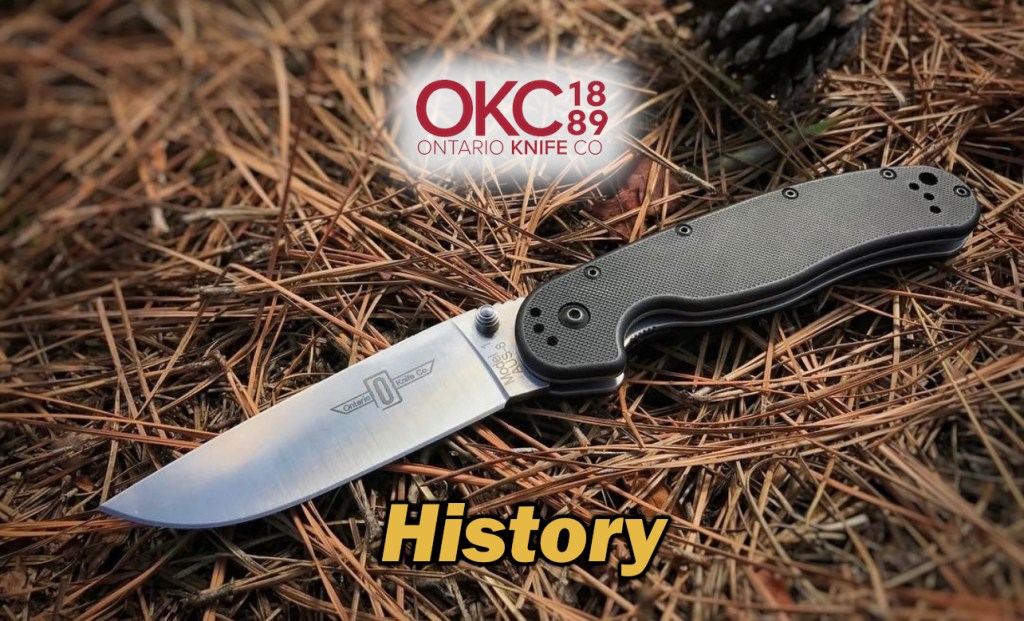
The Ontario Knife Company, often referred to simply as OKC, stands as one of the most enduring names in American cutlery. With roots stretching back to the late 19th century, the company’s history mirrors the broader story of American manufacturing, military service, and working-class utility. Known for producing hard-use knives designed for soldiers, outdoorsmen, and tradesmen, Ontario Knife Company built its reputation on reliability rather than ornamentation.
For more than a century, OKC knives have been carried into forests, factories, and battlefields around the world, earning a legacy grounded in function, durability, and American industrial tradition.
Early Beginnings in New York
The Ontario Knife Company was founded in 1889 in Naples, New York, a small town in Ontario County that would lend the company its name. The region was already known for tool and cutlery production, supported by access to waterways, raw materials, and skilled labor. Like many early American cutlery companies, Ontario Knife Company began by producing simple tools and kitchen cutlery for everyday use.
At the time, knives were essential household and working tools. Farmers, hunters, craftsmen, and laborers depended on blades for daily tasks, and Ontario Knife Company focused on meeting these practical needs. The company’s early success was built on producing affordable, dependable knives rather than luxury goods.
This emphasis on utility would remain a defining characteristic throughout the company’s long history.
Growth Through American Industrialization
As the United States entered the late 19th and early 20th centuries, industrialization transformed manufacturing. Ontario Knife Company expanded alongside this growth, improving production techniques while maintaining a focus on durability and function. The company gradually moved operations to Franklinville, New York, which became its long-term home.
Franklinville provided access to transportation routes and a stable workforce, allowing OKC to scale production. During this period, the company produced a wide range of knives, including hunting knives, butcher knives, and general utility blades.
Rather than chasing trends, Ontario Knife Company focused on consistent quality. This approach helped the brand build trust among working Americans who relied on their tools daily.
World War I and Military Production
The outbreak of World War I marked a turning point for Ontario Knife Company. Like many American manufacturers, OKC shifted part of its production to support the war effort. Military demand for durable cutting tools surged, and the company contributed by producing bayonets, fighting knives, and tactical blades.
Supplying the military required strict standards, consistency, and the ability to produce at scale. Ontario Knife Company proved capable on all fronts. The experience gained during wartime production strengthened the company’s expertise and deepened its relationship with military procurement.
This period laid the foundation for Ontario Knife Company’s long association with the U.S. Armed Forces.
Between the Wars: Refinement and Expansion
Following World War I, Ontario Knife Company returned to civilian markets while retaining the lessons learned from military manufacturing. The interwar years saw continued growth, with OKC refining its designs and expanding its product line.
Hunting and outdoor recreation became increasingly popular in America during the early 20th century, and Ontario Knife Company was well positioned to serve this market. Its knives appealed to sportsmen who valued practical, no-nonsense tools over decorative pieces.
By focusing on field-ready performance, the company maintained relevance through changing economic conditions, including the challenges of the Great Depression.
World War II and Iconic Military Knives
World War II dramatically expanded Ontario Knife Company’s role in military production. Once again, the company became a key supplier of knives and edged tools for U.S. forces. During this era, Ontario Knife Company produced some of its most iconic designs, including bayonets and combat knives that would become legendary.
One of the most significant contributions was the production of the M3 Trench Knife and later bayonet designs that accompanied U.S. service rifles. These blades were designed for harsh conditions, emphasizing strength, simplicity, and reliability.
Millions of Ontario-made knives were carried by soldiers across Europe and the Pacific. Many surviving examples remain in collections today, valued for both their historical significance and rugged construction.
Postwar America and the Rise of Utility Knives
After World War II, Ontario Knife Company transitioned back to civilian production while continuing to serve military contracts. The postwar era brought economic growth and a renewed interest in outdoor activities such as camping, hunting, and fishing.
OKC responded by producing a range of fixed-blade and folding knives designed for outdoor use. These knives reflected the company’s military heritage, often featuring simple designs, durable materials, and comfortable ergonomics.
Rather than pursuing flashy aesthetics, Ontario Knife Company focused on tools that worked reliably in the field. This philosophy resonated with outdoorsmen, tradesmen, and survivalists alike.
The Cold War Era and Continued Military Service
Throughout the Cold War, Ontario Knife Company remained a trusted supplier to the U.S. military. The company produced bayonets and utility knives compatible with evolving firearms platforms, including the M7 bayonet for the M16 rifle.
Military contracts during this period required consistency over long production runs, and OKC’s ability to meet these demands reinforced its reputation. The company became one of the few American manufacturers capable of producing large quantities of military-grade blades domestically.
At the same time, civilian demand for tactical-style knives began to grow, influenced by military imagery and survival culture. Ontario Knife Company’s designs naturally fit this emerging market.
The RAT Collaboration and Modern Popularity
One of the most important developments in Ontario Knife Company’s modern history was its collaboration with Randall’s Adventure & Training, commonly known as RAT. This partnership led to the creation of the RAT Model 1 and RAT Model 2 folding knives.
Designed with input from survival instructors, these knives emphasized ergonomics, blade performance, and affordability. The RAT series quickly became some of the most popular working folders on the market, praised for offering excellent performance at accessible price points.
The success of the RAT models introduced Ontario Knife Company to a new generation of knife users and solidified its place in the modern EDC landscape.
Manufacturing Philosophy and Design Approach
Ontario Knife Company has always prioritized function over form. Its knives are designed to be used hard, often featuring simple blade shapes, robust handles, and steels chosen for toughness rather than exotic appeal.
This philosophy has earned OKC both praise and criticism over the years. While some collectors gravitate toward premium materials and intricate designs, many users appreciate Ontario Knife Company for producing knives they are not afraid to use.
The brand’s identity is closely tied to working tools rather than display pieces.
Challenges and Industry Changes
Like many American manufacturers, Ontario Knife Company faced challenges in the late 20th and early 21st centuries. Global competition, rising production costs, and changing consumer expectations placed pressure on domestic manufacturing.
Despite these challenges, OKC continued to produce many of its products in the United States, particularly military contracts and select civilian knives. This commitment to domestic production became a point of pride for the brand and its supporters.
Ownership changes and industry consolidation affected the company in later years, but its designs and legacy remained influential within the knife world.
Cultural and Historical Impact
Ontario Knife Company’s influence extends beyond individual knife models. Its products have been carried by soldiers, hunters, survivalists, and workers for generations. Many people associate OKC knives with reliability earned through real-world use rather than marketing.
For collectors, Ontario Knife Company represents a tangible connection to American military history. For users, it symbolizes tools built to endure hard conditions without unnecessary embellishment.
Few knife companies can claim such a broad and practical legacy.
An Enduring American Knife Legacy
The history of the Ontario Knife Company is inseparable from the history of American industry and military service. From small-town beginnings in New York to battlefields across the globe, OKC knives have been shaped by necessity, function, and experience.
While trends in the knife world continue to evolve, the principles that defined Ontario Knife Company remain timeless. Strength, simplicity, and reliability have always mattered more than flash.
That legacy continues to define Ontario Knife Company’s place in knife history, ensuring its name remains respected among those who value tools built to work.
 Knife History
Leave a comment