
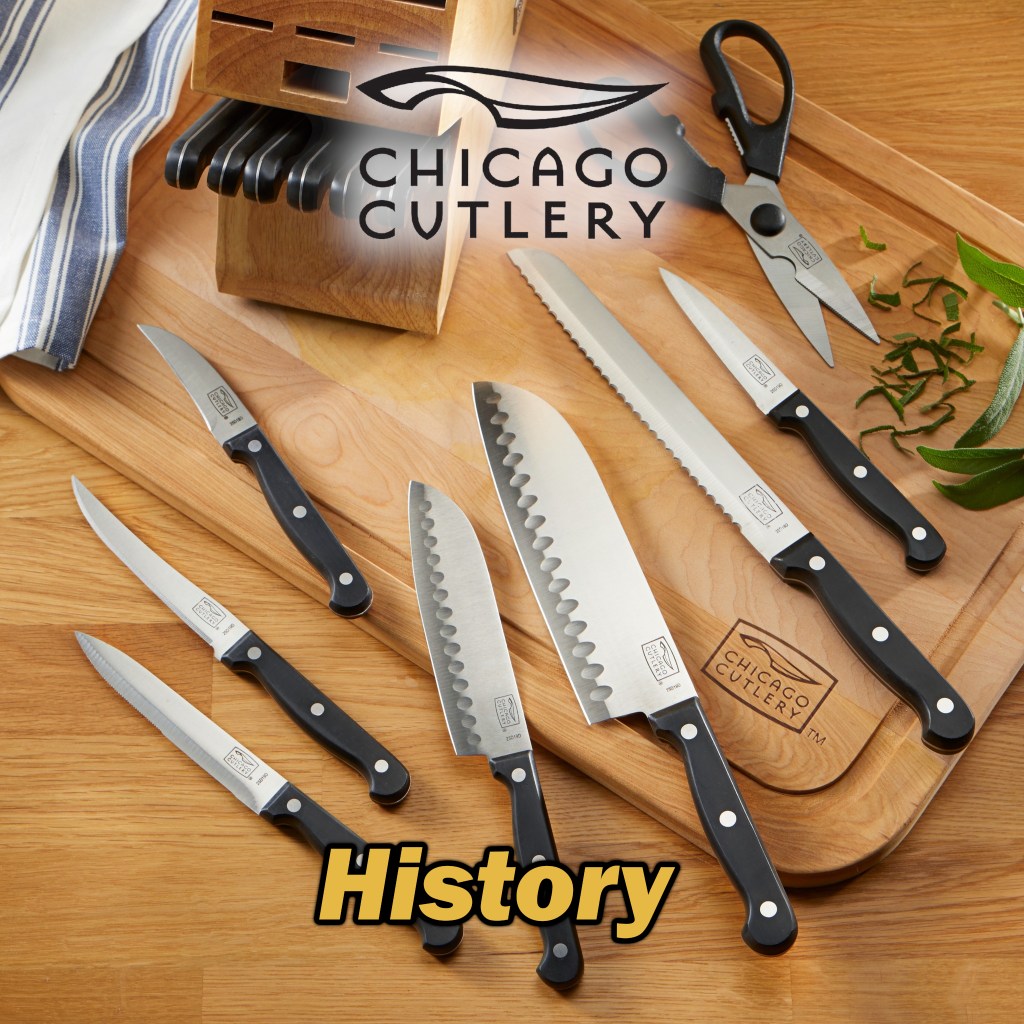
Chicago Cutlery is one of the most recognizable names in American kitchen knives, a brand that became synonymous with affordable, dependable cutlery for generations of home cooks. Unlike knife companies rooted in hunting, military, or artisanal traditions, Chicago Cutlery’s legacy is closely tied to the rise of the modern American kitchen. Its history reflects broader changes in manufacturing, consumer habits, and the shifting balance between domestic production and global supply chains.
Origins in Mid-20th Century America
Chicago Cutlery was founded in 1935 in Chicago, Illinois, during a period of rapid industrial growth and innovation in the United States. The company initially focused on producing knives with wooden handles made from discarded barrel staves, an approach that was both economical and environmentally conscious for its time.
This early emphasis on practicality and efficiency would define the brand for decades. Chicago Cutlery was not created to serve professional chefs or collectors, but everyday households. Its founders recognized a growing demand for affordable kitchen tools that were durable, easy to use, and readily available.
Chicago’s central role as a manufacturing and distribution hub made it an ideal location for the company. The city’s industrial infrastructure allowed Chicago Cutlery to scale production efficiently while maintaining competitive pricing.
Early Design Philosophy and Accessibility
From the beginning, Chicago Cutlery focused on function over ornamentation. The knives were designed to perform common kitchen tasks reliably rather than impress through appearance. Carbon steel blades, known for their sharpness and ease of sharpening, were commonly used in the brand’s early years.
One of Chicago Cutlery’s most important contributions was making quality kitchen knives accessible to middle-class families. At a time when many knives were either cheaply made or prohibitively expensive, Chicago Cutlery occupied a middle ground. Its knives were affordable but not disposable, practical but not crude.
The company also emphasized consistency. Customers could expect similar performance from knife to knife, reinforcing trust in the brand.
Growth and National Recognition
As post–World War II America experienced economic expansion, Chicago Cutlery grew alongside it. The rise of suburban living and home cooking created an ideal environment for kitchen-focused brands. Chicago Cutlery’s knives became common wedding gifts, housewarming presents, and everyday kitchen essentials.
The company expanded its product lines to include knife sets, steak knives, and specialty kitchen tools. Packaging and retail presence became increasingly important, and Chicago Cutlery developed recognizable branding that helped it stand out on store shelves.
By the mid-20th century, Chicago Cutlery had established itself as a household name, with products widely available in department stores and catalog retailers across the country.
Transition in Materials and Manufacturing
As consumer preferences changed, Chicago Cutlery adapted. While early knives relied heavily on carbon steel, the brand gradually transitioned to stainless steel blades. Stainless steel required less maintenance, resisted corrosion, and better suited the needs of casual home cooks.
This transition mirrored broader trends in the cutlery industry. Ease of care became more important than traditional sharpening characteristics, particularly as fewer households maintained sharpening tools or skills.
Manufacturing methods also evolved. Advances in stamping and automated production allowed Chicago Cutlery to produce knives efficiently while maintaining consistent shapes and tolerances. These methods helped keep prices accessible while meeting growing demand.
Influence on American Kitchen Culture
Chicago Cutlery’s impact extends beyond the knives themselves. For many Americans, it represented their first experience with a dedicated kitchen knife set. The brand helped normalize the idea that specific knives served specific purposes, such as chef’s knives, paring knives, and bread knives.
This educational influence shaped how generations approached cooking. Rather than relying on a single all-purpose knife, home cooks began to see value in specialized tools. Chicago Cutlery played a key role in making that shift accessible and affordable.
Its knives became part of daily routines, associated with family meals and home cooking rather than professional kitchens.
Ownership Changes and Corporate Evolution
Like many long-standing consumer brands, Chicago Cutlery underwent changes in ownership over time. As the retail landscape evolved and competition increased, the brand became part of larger corporate structures.
Eventually, Chicago Cutlery was acquired by Lifetime Brands, a major housewares company. This acquisition marked a shift in how the brand operated, emphasizing global manufacturing and broader distribution networks.
Production increasingly moved overseas, reflecting industry-wide changes rather than decisions unique to Chicago Cutlery. While this shift altered perceptions among some longtime users, it allowed the brand to remain competitive in a crowded and price-sensitive market.
Modern Chicago Cutlery Products
Today, Chicago Cutlery continues to focus on kitchen knives designed for everyday use. Modern product lines emphasize stainless steel blades, ergonomic handles, and low-maintenance materials suited to contemporary lifestyles.
The brand’s knives are typically positioned for casual home cooks rather than culinary professionals. This focus aligns with its historical mission of accessibility, even as the marketplace has become more saturated with premium and boutique knife brands.
Chicago Cutlery’s continued presence demonstrates the enduring demand for straightforward, reliable kitchen tools.
Reputation and Criticism
As the knife market expanded, Chicago Cutlery faced increased competition from both high-end cutlery makers and low-cost imports. This shift affected the brand’s reputation among enthusiasts, particularly those who prioritize premium materials and traditional craftsmanship.
However, it is important to understand Chicago Cutlery within its intended context. The brand has always served mainstream households rather than collectors or professionals. Judged by that standard, its knives continue to fulfill their purpose effectively.
Chicago Cutlery’s history is less about innovation at the cutting edge and more about consistency and reliability over time.
Collectibility and Nostalgia
Older, U.S.-made Chicago Cutlery knives have gained interest among collectors, particularly those featuring wooden handles and carbon steel blades. These knives represent a period when American manufacturing dominated the kitchen cutlery market.
For many collectors, the appeal is as much nostalgic as it is functional. Vintage Chicago Cutlery knives evoke memories of family kitchens and traditional cooking habits, making them cultural artifacts as well as tools.
While not rare or luxurious, these knives carry historical significance tied to everyday American life.
Chicago Cutlery’s Place in Knife History
Chicago Cutlery occupies a unique position in knife history as a brand that democratized kitchen cutlery. It helped make functional knife sets a standard feature of American households rather than a luxury.
Its influence lies not in craftsmanship prestige, but in scale and accessibility. Few brands have put knives into as many homes or shaped as many cooking experiences.
This role gives Chicago Cutlery an enduring legacy, even as the industry continues to evolve.
A Brand Shaped by the American Kitchen
Chicago Cutlery’s history is inseparable from the story of American home cooking. From its origins in Depression-era Chicago to its place in modern kitchens, the brand reflects changing tastes, technologies, and lifestyles.
While it may not command the attention of professional chefs or knife collectors, Chicago Cutlery remains an important chapter in cutlery history. Its knives served millions of households, quietly shaping how people cooked, prepared meals, and experienced the kitchen.
In that sense, Chicago Cutlery’s legacy is not defined by prestige, but by presence. It stands as a reminder that the most influential tools are often the ones used every day, generation after generation.
 Knife History
Leave a comment