
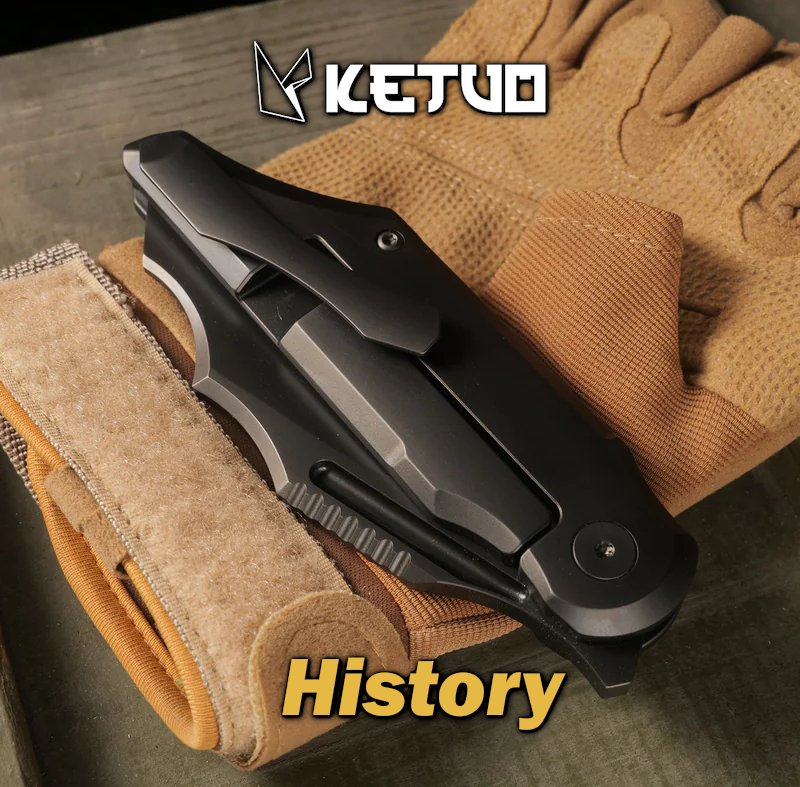
Ketuo Knives represents a newer generation of knife manufacturers shaped by global production, modern machining, and the rapidly evolving preferences of contemporary knife enthusiasts. While the brand does not have the century-old lineage of traditional American or European cutlery companies, its history reflects broader changes in how knives are designed, produced, and distributed in the 21st century. Ketuo’s rise illustrates how advanced manufacturing, design-driven branding, and direct engagement with knife users have reshaped the industry.
Origins in Modern Knife Manufacturing
Ketuo Knives emerged during a period when the knife industry was undergoing a major transformation. Advances in CNC machining, precision heat treatment, and global supply chains allowed newer brands to enter the market with capabilities that once required decades of infrastructure. Ketuo was founded with this modern reality in mind, positioning itself as a manufacturer capable of producing consistent, high-quality folding knives using contemporary methods.
Rather than beginning as a traditional cutlery workshop, Ketuo developed as a design-forward brand focused on clean lines, reliable mechanisms, and repeatable quality. From the outset, the company aimed to meet the expectations of modern knife users who value precision, smooth action, and durable materials.
This approach allowed Ketuo to establish a foothold in a competitive market dominated by both legacy brands and an increasing number of emerging manufacturers.
Focus on Folding Knife Design
Ketuo’s identity is closely tied to folding knives, particularly modern EDC-style folders. As everyday carry knives gained popularity among enthusiasts and general users alike, Ketuo recognized the demand for tools that balanced performance, aesthetics, and affordability.
The company’s designs typically emphasize streamlined profiles, practical blade shapes, and ergonomic handles. Rather than pursuing extreme or novelty-driven designs, Ketuo knives often reflect a restrained, functional aesthetic that appeals to users seeking dependable tools.
This focus aligns with broader trends in the knife community, where reliability and everyday usability often outweigh decorative or exaggerated features.
Manufacturing Approach and Materials
Ketuo Knives relies heavily on modern manufacturing techniques to achieve consistency across production runs. CNC machining allows for precise tolerances in blade grinds, lock interfaces, and handle components, contributing to predictable fit and function.
Blade steels used by Ketuo typically reflect contemporary preferences, with an emphasis on stainless and tool steels that offer a balance of corrosion resistance, edge retention, and toughness. Heat treatment processes are designed for repeatability, ensuring that each blade meets performance expectations without significant variation.
Handle materials often include aluminum alloys, G-10, Micarta, and other modern composites. These materials are selected for durability, weight reduction, and comfort, reinforcing Ketuo’s focus on practical everyday knives.
Locking Mechanisms and Functionality
A key aspect of Ketuo’s development has been its attention to locking mechanisms. In the modern folding knife market, smooth action and secure locks are critical to user confidence. Ketuo designs commonly feature liner locks, frame locks, and other proven systems that emphasize safety and ease of use.
The company’s emphasis on consistent lock engagement reflects its broader philosophy of functional reliability. Rather than experimenting heavily with unconventional mechanisms, Ketuo favors designs that have been widely tested and accepted within the knife community.
This approach helps ensure that Ketuo knives meet the expectations of both experienced users and newcomers.
Design Identity and Aesthetic Direction
Ketuo’s aesthetic identity aligns with contemporary tastes in EDC knives. Clean lines, subtle contours, and balanced proportions define much of the brand’s catalog. While individual models may incorporate unique elements, the overall design language remains cohesive.
This consistency allows Ketuo to build brand recognition without relying on aggressive marketing or extreme styling. The knives are designed to fit naturally into daily use, whether carried in a pocket, pack, or toolkit.
By avoiding excessive branding or ornamentation, Ketuo positions its knives as tools first and foremost.
Market Position and Accessibility
Ketuo Knives occupies a space in the market that emphasizes value without aiming for the lowest possible price point. The brand targets users who want modern design and dependable performance without the premium cost associated with high-end or custom knives.
This positioning has allowed Ketuo to compete effectively in a crowded field, particularly among users who prioritize function and materials over brand prestige. Accessibility plays a key role in the company’s growth, as its knives appeal to a broad audience ranging from casual users to dedicated enthusiasts.
Ketuo’s presence in online marketplaces and specialty retailers has further expanded its reach, allowing the brand to connect with customers globally.
Relationship with the Knife Community
Like many modern knife brands, Ketuo’s development has been influenced by feedback from the knife community. Reviews, user discussions, and online content play a significant role in shaping perceptions and driving design refinement.
This feedback-driven environment encourages continuous improvement. Adjustments to blade shapes, handle ergonomics, and action smoothness often reflect real-world use rather than purely theoretical design goals.
By responding to user expectations, Ketuo reinforces its reputation as a brand attentive to function and practicality.
Comparison to Traditional Knife Brands
Ketuo’s history differs markedly from that of legacy cutlery companies rooted in regional traditions or artisanal production. Instead of relying on historical patterns or longstanding brand identity, Ketuo defines itself through modern execution and adaptability.
This distinction is neither a limitation nor a weakness, but rather a reflection of the evolving knife industry. Ketuo represents a generation of manufacturers that leverage technology and design to meet current needs rather than preserving historical methods for their own sake.
For many users, this approach offers a compelling alternative to both mass-market utility knives and high-cost custom pieces.
Evolution and Ongoing Development
As Ketuo continues to evolve, its catalog reflects gradual refinement rather than radical shifts. New models build upon established design principles, incorporating subtle improvements in ergonomics, materials, and finish.
This steady progression helps maintain brand cohesion while allowing room for innovation. Rather than chasing trends, Ketuo appears focused on strengthening its core offerings and maintaining consistency.
Such an approach supports long-term credibility in a market where rapid overextension often leads to quality issues.
Ketuo Knives in the Modern Knife Landscape
Ketuo Knives occupies a meaningful place within the modern knife landscape as a brand that embraces contemporary manufacturing without losing sight of practical use. Its knives are not designed as collectibles or luxury items, but as everyday tools that reflect modern expectations.
The brand’s history, though relatively short, mirrors the broader evolution of knife making in the digital age. Precision machining, global distribution, and community-driven feedback now define success as much as tradition and heritage once did.
Ketuo’s continued relevance depends on its ability to maintain quality, adapt to user needs, and refine its designs without sacrificing its core identity.
A Brand Shaped by the Modern Knife Era
Ketuo Knives represents a chapter in knife history defined by technology, accessibility, and practical design. While it does not carry the weight of centuries-old tradition, it reflects the realities of modern knife use and production with clarity and purpose.
By focusing on functional design, consistent manufacturing, and everyday usability, Ketuo has established itself as a credible option in a competitive market. Its story illustrates how new brands can carve out a place in the knife world not by imitating the past, but by responding thoughtfully to the present.
As the knife industry continues to evolve, Ketuo Knives stands as an example of how modern manufacturing and design can produce tools that are dependable, accessible, and relevant to today’s users.
 Knife History
Leave a comment