
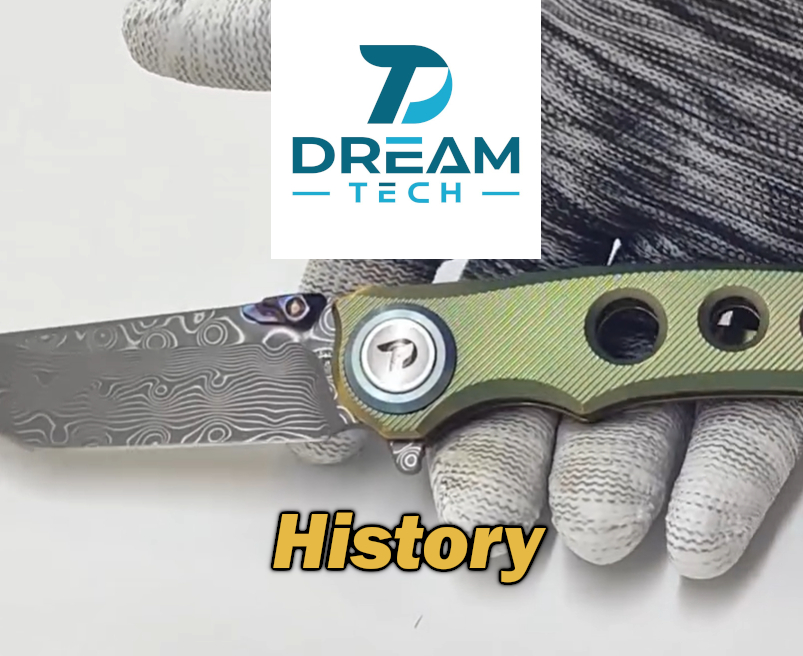
DreamTech Knives represents a newer chapter in knife history, one shaped by global manufacturing, contemporary materials, and a market that values both performance and accessibility. Unlike legacy cutlery brands rooted in centuries of tradition, DreamTech emerged in an era where precision machining, modern steels, and international collaboration define how knives are made and distributed. Its history reflects the evolution of the knife industry itself, where innovation, affordability, and everyday functionality play a central role.
Origins in the Modern Knife Market
DreamTech Knives was founded during a period when the knife world was expanding rapidly beyond traditional hunting and utility tools. Everyday carry knives, tactical-inspired designs, and modern folding mechanisms had become increasingly popular, especially among enthusiasts seeking reliable tools that fit seamlessly into daily life.
Rather than attempting to recreate historical blade patterns, DreamTech positioned itself as a forward-looking brand. From the outset, its focus was on producing knives that met modern expectations for smooth action, ergonomic handling, and consistent quality. This approach allowed DreamTech to enter a competitive market without relying on nostalgia or heritage branding.
The company’s origins align with a broader shift toward design-driven knife production, where form and function are developed together through digital modeling and precision machining.
Emphasis on Folding Knives and EDC Use
DreamTech Knives has primarily built its identity around folding knives intended for everyday carry. As EDC culture grew, so did the demand for knives that balanced compact size with dependable performance. DreamTech recognized this demand and designed knives that emphasized practicality over excess.
Blade shapes tend to favor versatility, making them suitable for a wide range of daily tasks. Handle designs are typically streamlined, with attention paid to comfort during extended use. These choices reflect DreamTech’s intent to serve users who want tools that integrate easily into daily routines rather than specialized or single-purpose knives.
This emphasis helped the brand gain traction among users looking for modern folders that felt refined without being overly complex.
Manufacturing Approach and Technology
DreamTech Knives relies on modern manufacturing methods to achieve consistency and scalability. CNC machining plays a significant role in the production process, ensuring tight tolerances in blade grinds, pivot systems, and handle components. This precision allows DreamTech to maintain predictable quality across production runs.
The use of modern equipment also enables efficient experimentation with designs, allowing the brand to refine models based on user feedback and performance testing. Rather than relying on hand-forged variability, DreamTech embraces repeatability as a strength.
This approach reflects the realities of contemporary knife production, where reliability and consistency are often more important than traditional craftsmanship for everyday users.
Materials and Blade Steels
DreamTech’s choice of materials aligns with current preferences in the knife community. Blade steels are selected for their balance of edge retention, corrosion resistance, and ease of maintenance. Stainless steels and modern alloys dominate the lineup, making the knives suitable for daily carry in a variety of environments.
Handle materials typically include aluminum alloys, G-10, Micarta, and other composites designed for durability and grip. These materials support the brand’s focus on lightweight construction and long-term usability.
Rather than emphasizing exotic or rare materials, DreamTech prioritizes materials that offer dependable performance at accessible price points.
Locking Mechanisms and Action
A defining feature of DreamTech Knives is its attention to smooth action and secure locking mechanisms. In the modern folding knife market, users expect knives to open and close effortlessly while maintaining safety and strength. DreamTech incorporates widely accepted lock types that meet these expectations without unnecessary complexity.
Attention to pivot tuning, detent strength, and lock engagement reflects an understanding of how critical these elements are to user confidence. Smooth deployment and reliable lockup help position DreamTech knives as practical tools rather than novelty items.
This functional focus reinforces the brand’s appeal to both experienced knife users and newcomers.
Design Identity and Visual Style
DreamTech’s visual identity is firmly rooted in modern design trends. Clean lines, subtle contours, and understated branding characterize much of its catalog. The knives are designed to look contemporary without appearing overly aggressive or tactical.
This aesthetic restraint broadens the brand’s appeal, making its knives suitable for a variety of settings. Whether carried in an office environment or used outdoors, DreamTech knives tend to maintain a neutral, functional appearance.
By avoiding excessive styling, DreamTech reinforces the idea that its knives are tools first, designed to be used rather than displayed.
Market Position and Accessibility
DreamTech Knives occupies a segment of the market focused on value-driven performance. The brand aims to offer modern features and dependable construction at price points that remain accessible to a wide audience.
This positioning allows DreamTech to compete effectively with both budget-oriented brands and more established manufacturers. By emphasizing consistency and usability, the company appeals to users who want reliable knives without paying premium prices associated with boutique or custom makers.
Accessibility has played a key role in DreamTech’s growth, particularly among users building their first serious EDC collection.
Engagement with the Knife Community
Like many contemporary brands, DreamTech’s development has been influenced by the knife community’s online presence. Reviews, social media discussions, and user feedback help shape design decisions and product evolution.
This engagement creates a feedback loop that encourages refinement and responsiveness. Adjustments to blade geometry, handle ergonomics, or hardware often reflect real-world input rather than purely theoretical improvements.
By remaining attentive to user experience, DreamTech demonstrates an understanding of how modern knife brands succeed in a connected marketplace.
Comparison to Legacy Knife Brands
DreamTech’s history differs significantly from that of traditional knife manufacturers rooted in regional or generational craftsmanship. Instead of relying on long-established patterns, DreamTech defines itself through adaptability and modern production techniques.
This distinction highlights the evolving nature of the knife industry. Brands like DreamTech represent a shift toward efficiency, consistency, and design-driven development rather than artisanal tradition.
For many users, this approach provides a practical alternative that aligns with contemporary expectations.
Evolution and Ongoing Refinement
As DreamTech Knives continues to develop, its catalog reflects gradual refinement rather than dramatic reinvention. New models often build upon established design principles, incorporating incremental improvements based on performance testing and user feedback.
This steady evolution helps maintain brand cohesion while allowing for innovation. Rather than chasing short-lived trends, DreamTech appears focused on strengthening its core offerings.
Such consistency supports long-term credibility in a market where rapid expansion often leads to quality concerns.
DreamTech Knives in the Modern Knife Landscape
DreamTech Knives occupies a meaningful place within today’s knife landscape as a brand shaped by technology, accessibility, and practical design. Its knives reflect the priorities of modern users who value smooth action, reliable materials, and everyday functionality.
Although the brand does not carry the weight of centuries-old tradition, its history mirrors the realities of contemporary knife making. Precision manufacturing, global collaboration, and community-driven development now define success as much as heritage once did.
A Brand Defined by Modern Expectations
DreamTech Knives represents a chapter in knife history written by modern tools, modern users, and modern manufacturing. By focusing on practical design, consistent quality, and accessible pricing, the brand has established itself within a competitive and rapidly evolving industry.
Its story illustrates how newer knife companies can succeed by understanding current needs rather than replicating the past. As the knife world continues to change, DreamTech Knives stands as an example of how modern design and production can deliver dependable tools that fit seamlessly into everyday life.
 Knife History
Leave a comment