
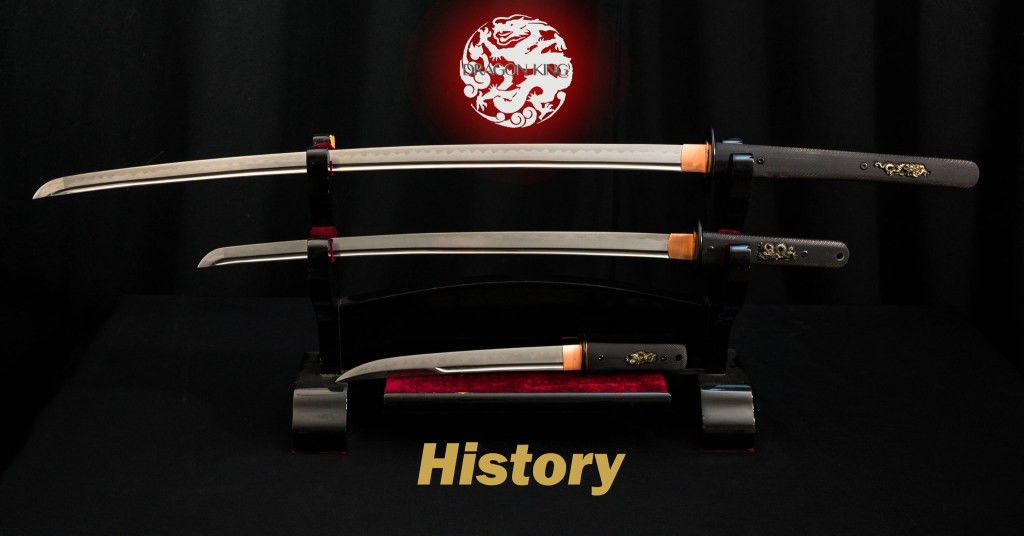
Dragon King is a brand built on respect for tradition, cultural heritage, and functional craftsmanship. Known for its focus on historically inspired Asian swords and weapons, Dragon King has carved out a unique place in the modern blade world by bridging ancient designs with contemporary manufacturing. While the brand itself is relatively young compared to centuries-old swordmaking traditions, its roots are deeply tied to historical forms, classical martial culture, and the enduring fascination with Eastern blades.
Origins and Brand Foundations
Dragon King was established as a specialized brand under the umbrella of CAS Hanwei, a company widely recognized for producing functional, historically inspired swords for martial artists, collectors, and reenactors. CAS Hanwei, founded by Paul Chen, had already earned international respect for its ability to produce usable swords at accessible price points while maintaining historical accuracy. Dragon King emerged as a focused extension of that philosophy, created to explore Asian weapon traditions with greater depth and specialization.
The intent behind Dragon King was not simply to replicate decorative pieces, but to offer blades that reflected the spirit, geometry, and intent of historical originals. From the beginning, the brand positioned itself between entry-level reproductions and high-end custom blades, appealing to practitioners who wanted authenticity without sacrificing practicality or affordability.
Inspiration from Asian Martial Traditions
Dragon King draws inspiration from a broad range of Asian cultures, particularly Chinese, Japanese, and Southeast Asian traditions. These regions developed distinctive weapons shaped by battlefield needs, metallurgy, and philosophical views on combat. Rather than focusing on a single style or era, Dragon King embraces diversity, producing blades that represent different historical functions, from battlefield weapons to civilian and ceremonial arms.
Chinese dao and jian designs play a major role in the brand’s catalog. The dao, often referred to as a saber, was a dominant military weapon for centuries and evolved into numerous regional variations. Dragon King models reflect this variety, with designs inspired by Ming and Qing dynasty forms, emphasizing cutting power, balance, and durability. The jian, a straight double-edged sword associated with scholars and officers, represents refinement and precision, and Dragon King’s interpretations focus on clean lines and controlled handling.
Japanese-inspired blades are also a key component of the brand’s identity. While not positioned as a replacement for traditional Japanese swordsmiths, Dragon King offers interpretations of katana and related blades that emphasize functional geometry and reliable heat treatment. These swords are designed to be usable training tools rather than purely ornamental pieces.
Design Philosophy and Historical Accuracy
What sets Dragon King apart is its emphasis on historical silhouette and practical intent rather than exaggerated fantasy styling. Many modern sword brands lean heavily into decorative flourishes, oversized fittings, or unrealistic proportions. Dragon King takes a more restrained approach, prioritizing believable dimensions, weight distribution, and blade geometry.
Research plays an important role in this process. Historical references, museum examples, and surviving antiques influence blade profiles, hilt construction, and fittings. While modern manufacturing constraints require some compromises, the goal is always to capture the essence of the original weapon rather than produce a loose visual approximation.
Dragon King swords are typically designed to feel alive in the hand. Balance points are carefully considered, and blade thickness tapers are engineered to support real cutting and handling rather than wall display. This focus has earned the brand a following among martial artists and practitioners of traditional sword arts.
Materials and Manufacturing Approach
Dragon King utilizes modern steel alloys and controlled heat treatment processes to achieve consistent performance. Many blades are produced using high-carbon steel, selected for its ability to hold an edge and withstand repeated use. While traditional folding and differential hardening are sometimes referenced, Dragon King does not rely solely on visual indicators of craftsmanship. Instead, the emphasis is on structural integrity and predictable performance.
Manufacturing is carried out using a blend of modern machining and hands-on assembly. This hybrid approach allows the brand to maintain quality control while keeping products accessible to a wider audience. Fit and finish are generally clean and functional, with attention paid to secure hilts, durable scabbards, and usable grips.
While Dragon King does not market itself as a luxury brand, it deliberately avoids cutting corners that would compromise safety or handling. This balance between cost and quality has been central to its growth and reputation.
Role in Martial Arts and Practical Use
Dragon King swords are frequently chosen by practitioners of historical martial arts, particularly those training in Chinese sword systems or cross-cultural cutting disciplines. The brand’s focus on realistic handling makes its blades suitable for solo forms practice, test cutting, and controlled drilling.
In contrast to purely decorative swords, Dragon King blades are designed to withstand use when handled responsibly. This functional intent has helped the brand gain credibility among users who value performance over appearance. For many enthusiasts, Dragon King serves as a stepping stone between entry-level replicas and fully custom swords.
The accessibility of the brand has also made it popular among instructors and training groups seeking reliable loaner or practice weapons that still reflect historical design.
Expanding the Catalog and Identity
Over time, Dragon King expanded its offerings beyond core sword designs to include wakizashi, sword canes, and katanas. This expansion reinforced the brand’s identity as a gateway into Asian weapon traditions rather than a single-category manufacturer.
Despite this growth, Dragon King has largely maintained its original design philosophy. New models tend to reflect lesser-known historical forms rather than chasing modern trends. This approach appeals to enthusiasts who enjoy discovering weapons outside the most commonly reproduced designs.
The brand name itself reflects its thematic focus. Dragons hold deep symbolic meaning across many Asian cultures, representing strength, wisdom, protection, and authority. By adopting this imagery, Dragon King aligns itself with the mythic and historical weight carried by the weapons it produces.
Position Within the Modern Blade Market
In the broader knife and sword industry, Dragon King occupies a distinct niche. It is neither a mass-market decorative brand nor a bespoke custom forge. Instead, it serves collectors and practitioners who want historically grounded designs at a realistic price point.
This positioning has allowed Dragon King to coexist alongside more specialized custom makers while still appealing to newcomers exploring traditional swords. Its association with CAS Hanwei provides additional credibility, as Hanwei’s decades-long presence in the industry reassures buyers regarding quality and support.
The brand’s consistency has also contributed to long-term trust. While individual models may vary, Dragon King has avoided drastic shifts in quality or direction, which is not always the case in the reproduction sword market.
Cultural Impact and Continued Relevance
Dragon King’s influence extends beyond physical products. By making historically inspired Asian weapons accessible, the brand helps preserve interest in traditional martial cultures. Many users encounter Chinese or Japanese sword forms for the first time through Dragon King blades, sparking deeper study into history, martial arts, and craftsmanship.
In an era dominated by modern tactical tools, Dragon King reminds enthusiasts of the artistry and intent behind classical weapons. Its swords are not designed to compete with modern knives but to honor a different lineage of edged tools shaped by centuries of human conflict and philosophy.
Carrying Tradition Forward
Dragon King represents a modern continuation of ancient ideas. While its blades are produced using contemporary methods, their inspiration comes from centuries of warfare, training, and cultural symbolism. The brand stands as a reminder that historical weapons are not relics of the past but living designs that still resonate with modern users.
By focusing on authenticity, functionality, and accessibility, Dragon King has established itself as a respected name in the world of Asian-inspired blades. Its history may be brief compared to the traditions it draws from, but its contribution to keeping those traditions alive is substantial.
 Knife History
Leave a comment